Are Your Book-buying Habits Feeding the 'Bad Guys'?
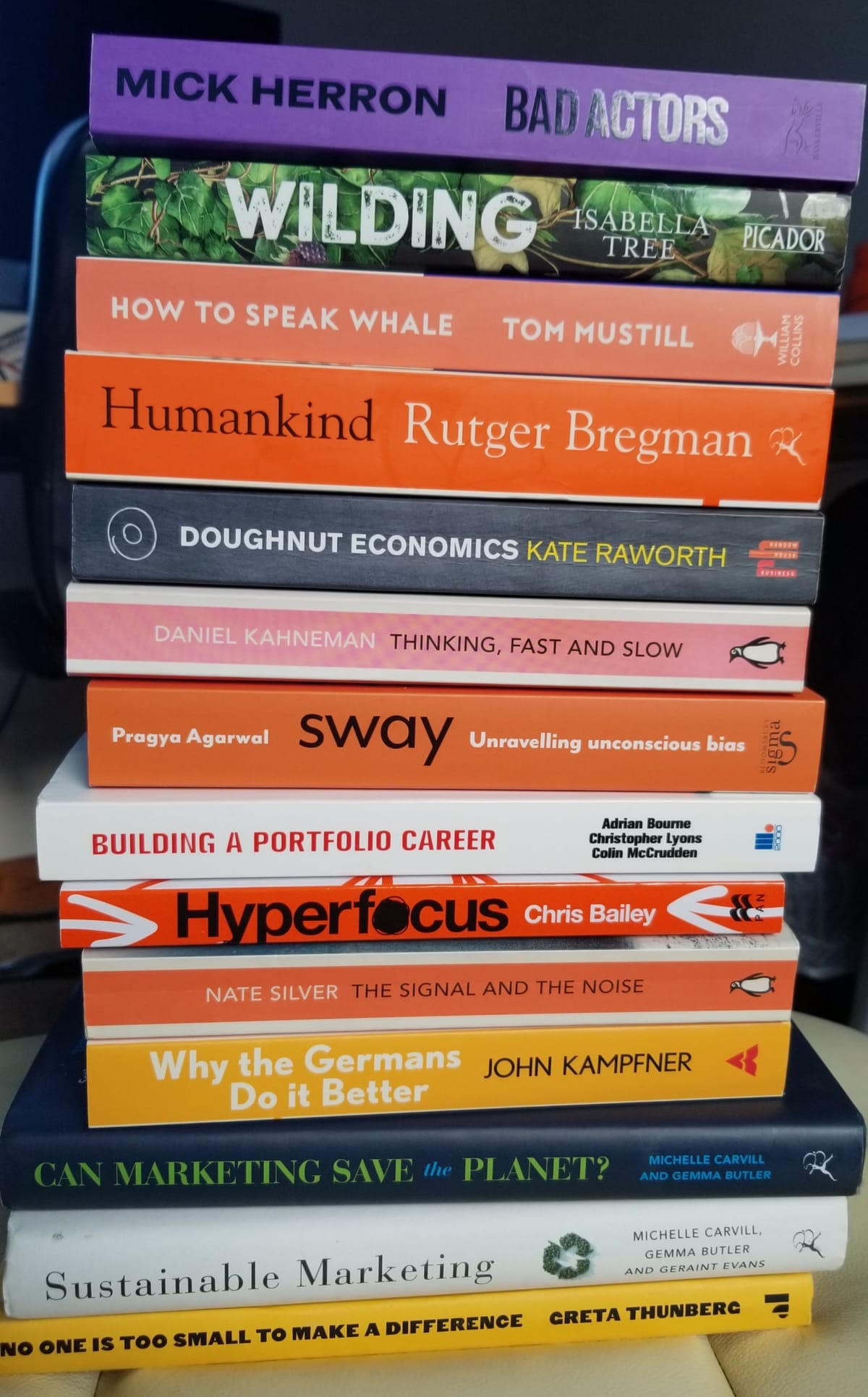
If you are a book lover, reading is a pleasure - but could your pastime have a social and environmental downside?
In its latest guide, Ethical Consumer magazine says our buying habits are often giving money to brands with a poor or terrible record for responsible business.
The magazine has rated and ranked 26 leading UK bookshops, and included alternatives to Amazon (and its related book-selling brands). Ethical Consumer has been calling for a boycott of Amazon since 2012 over its tax avoidance.
The UK Booksellers Score Table
In the magazine's score table, Oxfam Books ranked first with a rating of 90 out of 100.
Runner-up was Ebooks dot com (with a score of 72) and third place went to audiobook seller xigxag - pronounced zig zag - (70).
Booksellers were rated on criteria around company ethos, climate, tax conduct and workers.
Only four other brands scored 60 out of 100 or more: Better World Books, Biblio, Bookshop dot org and the Guardian Bookshop. World of Books just missed out on a green 'best buy' score with 58.
You may be surprised to discover that Waterstones, Blackwells and Foyles all scored a miserable 2 out of 100.
Waterstones owns both Blackwells and Foyles. Waterstones, in turn, is owned by US firm Elliott Investment Management. Ethical Consumer magazine says Elliott Investment Management is "renowned for buying the debts of struggling countries on the cheap and pursuing them for full repayment". It also points to Elliott's founder having been criticised for his pro-Israel lobbying.
The magazine says Elliott Investment lost points for its lack of ethical policies and this affected the score for high-street favourite Waterstones - pushing it almost to the bottom of the table.
And who was at the bottom?...
Amazon Books, AbeBooks and Audible ALL Score ZERO for Ethical Business Practice... and so does Google Books
Tech giants Amazon and Google were joint last in the latest Ethical Consumer guide.
Google Books scored ZERO (0 out of 100). So did Amazon Books and two other Amazon subsidiary brands, AbeBooks and Audible. Four big fat zeros for ethical practice.
Ethical Consumer recommends readers avoid Amazon Books, AbeBooks and Audible - all part of the Amazon empire.
The magazine says Amazon accounts for more than 50% of all print sales of books in the UK yet is one of the biggest corporate tax avoiders in the country. It estimates that Amazon's corporate tax avoidance could have cost the UK around £433 million in lost taxes in 2023 alone.
Amazon says it has paid all taxes required by the law and made significant capital investment in the UK.
What are the Alternatives to Amazon Books, AbeBooks and Audible?
Ethical Consumer magazine says there are plenty of alternatives for book lovers who want to support more ethical brands.
It encourages people to buy from their local, independent bookshop or borrow from their nearest library. (Charity shops can also be a good source of second-hand books).
According to The Bookseller, the number of independent bookshops in the UK declined in 2024, from 1,063 to 1,052. That's just a 1% fall and while some indie bookshops closed, new ones opened.
The Booksellers Association says the industry has fared well compared to the wider retail sector. The 1,052 independent bookshops in 2024 is still a number healthily above the all-time low of 867 in 2016.
There is still space for the smaller, knowledgable, resilient, innovative and customer-focused bookshop to do well.
Ethical Consumer has the following 'Best Buy' recommendations for UK book lovers.
Best for Physical Bookshops: Libraries, local independent bookshops and Oxfam.
Best for Online Bookshops: Better World Books, Biblio, Bookshop dot org, Oxfam, The Guardian Bookshop.
Best for ebooks: eBooks dot com
Best for audiobooks: xigxag
Best for secondhand books: Better World Books, Biblio, Oxfam
Questions for Consideration
Q1. Did the ratings and rankings by Ethical Consumer magazine surprise you? If so, in what way?
Q2. Will the findings in the Ethical Consumer guide to UK booksellers change the way you shop or discover books?
Q3. As a result of the ZERO scores for Amazon Books, AbeBooks and Audible, would you stop buying from any or all of them?
Q4. Which independent bookseller do you use? (Share the name and location)
Q5. How many books do you usually read each year? (according to YouGov, 40% of Britons hadn't read a book in the year to March 2025 but 4% read 50 books or more)