Give Us a More Peaceful, Fairer, Cleaner and Greener World, say Children around the Globe
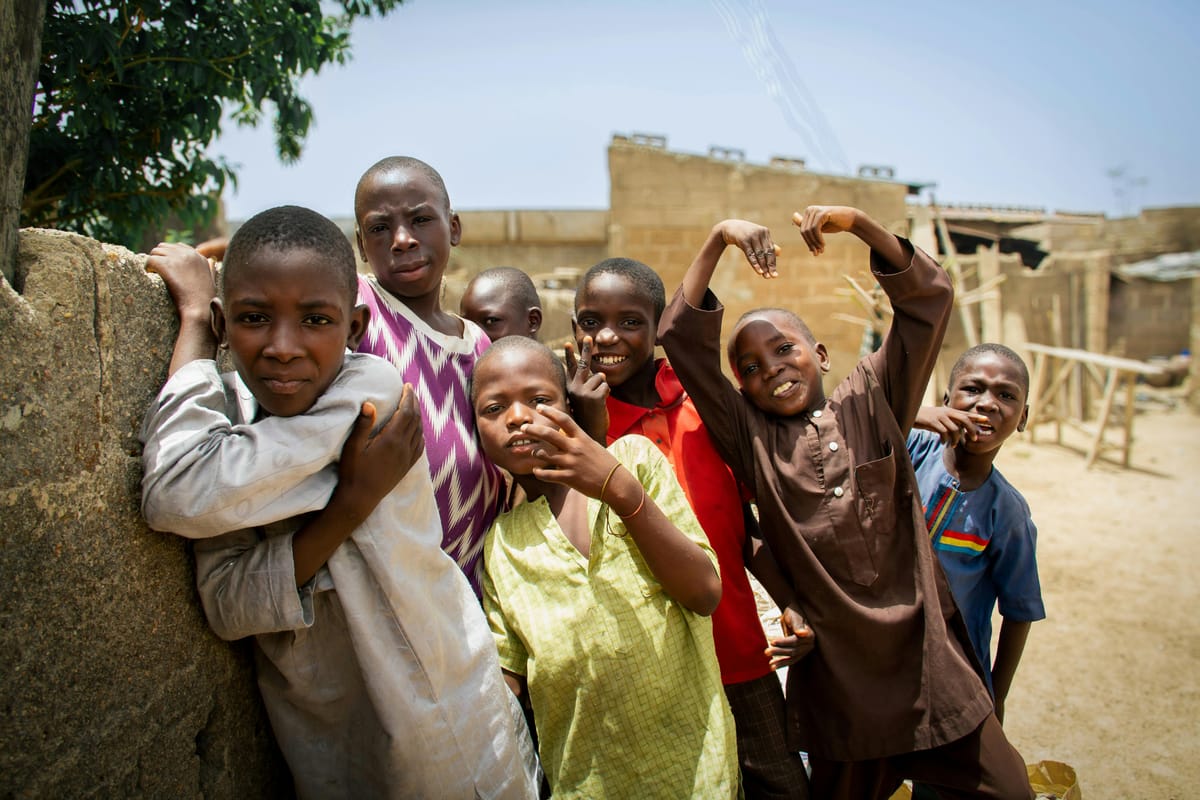
Peace and equality, a cleaner and greener world, technology as a force for good, and an improved quality of life and work.
This is what children and young people across the globe want the future to be like, according to an international survey carried out by Our World 2050.
And the global movement wants more youngsters to have their say.
Giving children a collective voice from all corners of the globe is the mission of Our World 2050.
The global movement is bringing together organisations, schools, researchers, communities and individuals across more than 100 countries - to listen to children and amplify their voices.
Children Encouraged to Share their Stories, Ideas and Dreams
Young people around the world are being encouraged to share their stories, concerns, ideas and dreams.
Nicolai Rottboll, founder of Our World 2050, says though there are around three billion children or young people on the planet, they feel they have little impact on shaping their future or are not taken seriously.
“They grow up with crisis narratives. There is a need for new perspectives, more creativity and more changemakers,” Nicolai said during an online presentation to members of the Association of Sustainability Practitioners (on 27 January this year).
He said Our World 2050’s mission was to empower children through training in how to express ideas and concerns, freeing their imaginations to dream of a brighter future, and to bring young people’s ideas to life through local action.
The global community Nicolai set up wants to collect and analyse one million voices from across the world, to challenge the status quo and bring young people’s creativity and ‘naïve’ ideas to the table of decision-makers.
The Greta Thunberg Effect
Nicolai said it was pretty amazing what kids could do when they put their minds to it.
He shared some high profile examples of what was possible with passion, creativity and motivation.
Greta Thunberg is now a household name. The Swedish activist gained international attention, aged 15, when she began a solo school strike outside the Swedish parliament in 2018.
Greta used prize money from her Right Livelihood Award (which some call an “alternative Nobel prize”) to set up The Greta Thunberg Foundation, a non-profit that promotes social, ecological and climate sustainability.
Malala Yousufzai’s campaign for girls’ education in Pakistan led to her being shot by the Taliban in 2012, when she was only 14. She survived and continued her work to promote school access for girls, becoming the youngest person to win the Nobel Peace Prize.
Boyan Slat began designing solutions for tackling ocean plastic at age 16. The Dutch inventor and entrepreneur, now 31, founded The Ocean Cleanup to remove plastic trash from the world’s seas.
Boyan delivered a TEDx talk in 2012 called “How the Oceans Can Clean Themselves”.
Three examples of young people who have changed the world or the world’s thinking. There are others who have become well-known but Nicolai would like to see more children, teens and young people having their ideas seen and voices heard.
Many more.
What has Our World 2050 done so far?
To date, Our World 2050 has:
- Collected the ‘voices’ (views, opinions and dreams, for example) from more than 1,000 children through a survey. The target is one million voices by 2029.
- Established a global partner network (including a team of advisors, for example, from the World Bank, One Earth, Plan International and Climate Cardinals) to support its work.
- Created an organisational setup to allow the community to do its work and achieve its mission objectives.
- Set up a website and social media channels, including LinkedIn, to help spread the word across the globe.
- Appointed and trained Youth Ambassadors in countries including the USA, UK, Denmark, Australia, Indonesia, Uganda and Kenya.
There is much more work to be done and the results of its ongoing global survey will help Our World 2025 and its partners to respond to what children and young people in different countries are saying.
What has the Our World 2050 Survey Revealed So Far?
The Our World 2050 Survey asks children and young people to imagine and describe the world in 2050, in their own words.
They are asked if they believe the world would be a better place to live in 2025 than today, what’s most important about the future to them, if they have any worries about the future and what they would change if they could.
The results make for interesting reading.
The majority (two thirds of those surveyed, or 66 per cent) were optimistic.
One in four young people (26 per cent) said they thought life in 2050 would be better than life today. However, two in every five (39 per cent) believe that would only happen “if people start making better choices.”
The key themes emerging from children’s hopes and dreams for 2050 were:
Peace and Equality - A strong wish for a world without war, genocide, racism, tribalism and social oppression. A desire for equal rights for all races, religions and genders. Many young people hope for kinder and honest political leaders.
Environmental Sustainability - A dominant theme from the survey responses was wanting a cleaner, greener world. Young people hope for solutions to climate change, clean air and water, a reduction in pollution, promotion of renewable energy, vertical farming, and the protection of nature and biodiversity.
Technology and AI Integration - Children imagine a world of smart homes, flying cars and robotics in 2050. Young people have mixed views on Artificial Intelligence, or AI.
They see it could be good for automating tedious jobs, helping with learning, and advancing science and medicine. But they also had fears around AI taking over human jobs, controlling society, and negative impacts on both human connection and critical thinking.
Improved Quality of Life and Work - Young people are mostly optimistic about life in 2050.
They see a life with less stress, and more time for family, hobbies and community. A better work-life balance with reduced working hours. They hope for meaningful, purpose-driven jobs and universal access to things like housing, healthcare and education.
Education and Learning - Young people said they want education that is personalised, focuses on critical thinking, and uses advanced technology such as Virtual Reality (VR) and AI tutors.
All that whilst also retaining human mentorship and the importance of outdoor and imaginative play. Healthy and sustainable eating, often plant-based, also gets frequent mention in the survey.
That’s on the hopeful side. What about the negatives?
The Big Worries for Young People.
The key themes of concern that emerged for young people were climate change and environmental degradation, political instability and conflict, socio-economic issues and inequality, the impact of technologies such as AI and social media, and human morality and leadership.
Many young respondents expressed worry about extreme weather, pollution, loss of nature and animal habitats; wars and the rise of dictators and fascism; poverty, high costs of living and the lack of job opportunities; potential misuse of AI and the spread of misinformation; and human greed, selfishness and lack of empathy in leadership.
Those are the early findings of the global survey and more work is being done. You will find links to the English, Spanish and Portuguese versions of the survey later in this article.
So, what has Our World 2050 got planned?
Pilot Projects Around the World from 2026
Nicolai said Our World 2050 planned to run pilot projects in five regions of the world between 2026 and 2029. The five regions are:
1. Africa (Kenya, Uganda, Malawi and Nigeria)
2. Asia (Indonesia)
3. Europe (UK)
4. North America (USA)
5. Latin America (Columbia, Mexico)
The aim of the pilot implementations is to collect one million voices from around the globe and produce the world’s first comparable dataset of children’s concerns, hopes, ideas and future visions.
Accessibility, approaches, training methods and more would be tested and adapted to result in a proven model to scale for a global rollout to other nations.
Get Involved and Help Young People around the World to Take the Survey
Our World 2050 has a long way to go to reach its goals of hearing from one million young voices and more.
Its global survey is one way it is going about achieving that goal. And you can help a child or young person to take the survey:
There is an English version.
There is a version in Spanish.
There is also a Portuguese version.
Select the language version most relevant to the child or young person. Help their voice be heard.
Other Ways to Support the Our World 2050 Initiative
Our World 2050 would love people to spread the word about its mission across social media across the globe.
It has also launched its first crowdfunding campaign to raise at least $580,000 USD to develop learning materials and teacher toolkits, expand its work to more countries, and train more Youth Ambassadors around the world.
Nicolai said: “We want to give the next generation a voice and challenge the status quo. We want young people to have imagination without fear, and see that they can be motivated and confident changemakers themselves.
“After all, they will be the next CEOs and decision-makers. The survey suggests they believe the world will be better in 2050 but only if people make better choices now.”