Giving Business Leaders a Professional Nudge Towards the Circular Economy using Storytelling, Statistics and Strategic Structure
It Begins with a Fishy Tale...
There’s a moment in my interview with circular economy expert Anne Raudaskoski when she wants to explain why the first section of her book is the most important to read.
And she does it by sharing a story.
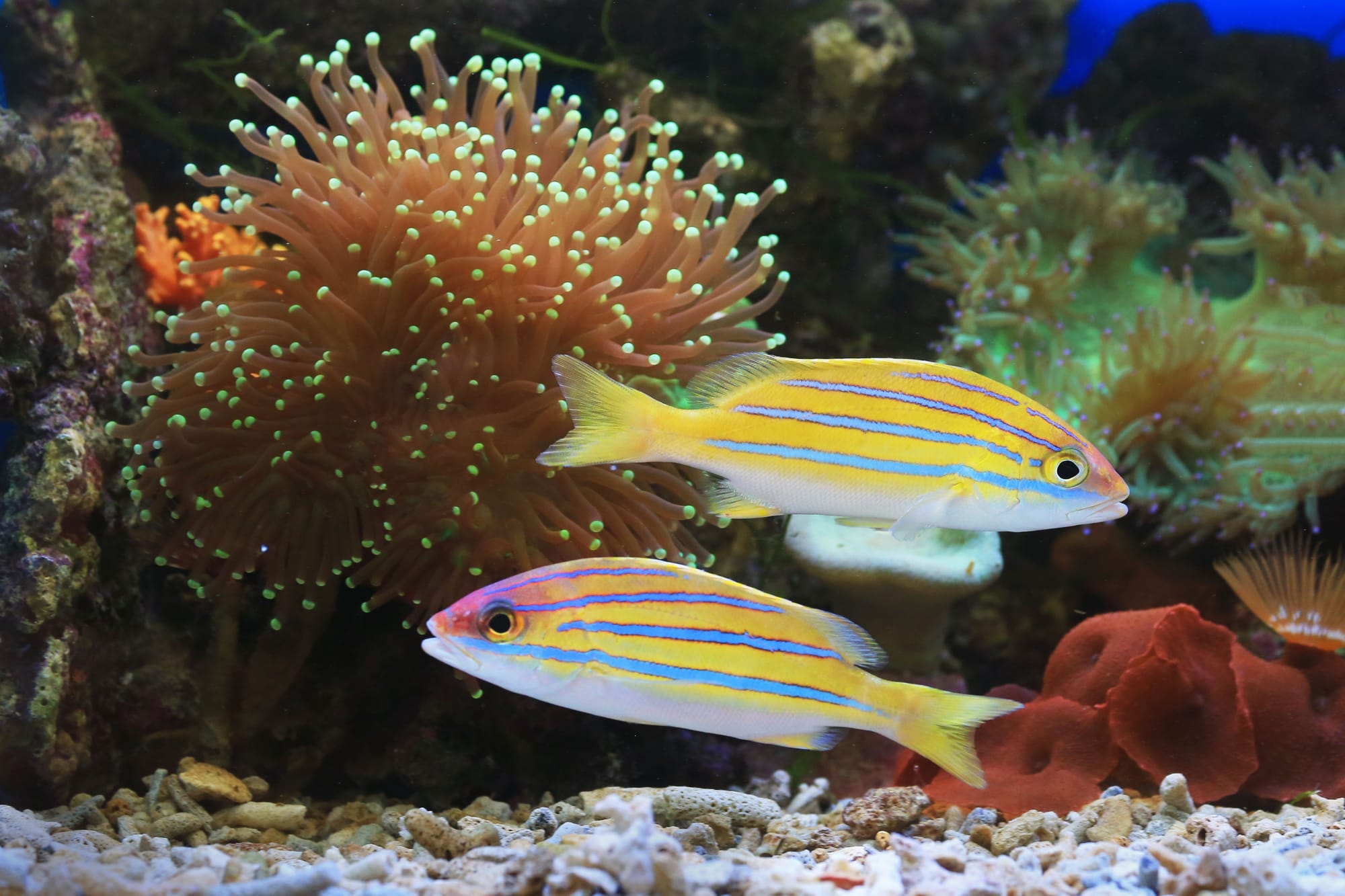
Anne recounts: “There are two young fish in a morning swim, and an older fish comes by, nods at them and asks them ‘Morning, boys, how is the water?’, and goes on. And the two young fish continue swimming in silence. Then, eventually, one turns to the other and says, ‘What the hell is water?’”
It’s not Anne’s story.
She borrowed it from writer and professor, David Foster Wallace, but that’s not important. What matters is that those few sentences make a big point. Everyone has their own perspective on the world.
It’s the type of story the Finnish circular economy consultant will share with city, municipality and business leaders to help them move away from long-established linear economy models of operating.
Anne said: “We all have a world view but it's not objective truth. It's something that we can explore, we can learn, and it can shift. Love and crises are very good catalysts for changing or nudging your worldview.
“We've all been born and raised in the linear economy, so all our thinking - but also all our processes, legislation - is based on linear thinking and mindset.
“And when we start talking about circularity, yes, we need those concrete solutions, and we need a business plan. But before that, based on my own experience, I think it is so important to ask yourself those fundamental questions and explore, ‘maybe there's something that we need to rethink when it comes to our worldview’?”
Linear Economy Versus Circular Economy
If you have heard of the terms linear economy and circular economy but are not quite sure what the difference is, here’s some guidance.
The way linear economy works is summarised by the phrase “take-make-waste”. We take, or extract, virgin raw materials and use them to make products. Those products have a lifespan - sometimes a very short lifespan - and then we throw them away as waste.
This way of doing things creates BIG problems across the world.
Anne said: “Almost all of what we design, manufacture and use turns into waste. In our heads, we see the world and those raw material stocks as something like a massive pipe and factory, just churning out all these virgin raw materials.”
But, she states, that's not the case because the planet is a closed system and only has a finite amount of raw materials. Plus, all that ‘linear economy’ activity creates high levels of CO2 - as well as other harmful emissions - which, among other things, contributes to biodiversity loss, ocean acidification, microplastic pollution, just to mention a few.
Anne continued: “Of course, there are renewable raw materials. We can talk about when we grow food or there's fish in the ocean, or we grow cotton. Those are renewable materials but even they have limits. So, we can't over exploit these natural resources.
“However, when we talk about metals and minerals, these are non-renewable materials. As the name suggests, there's a certain quantity of them and then it's gone. It's just literally gone, including water. Even water circulates. We don't get any virgin raw materials or water from an ‘outer’ space. We live in a closed system.
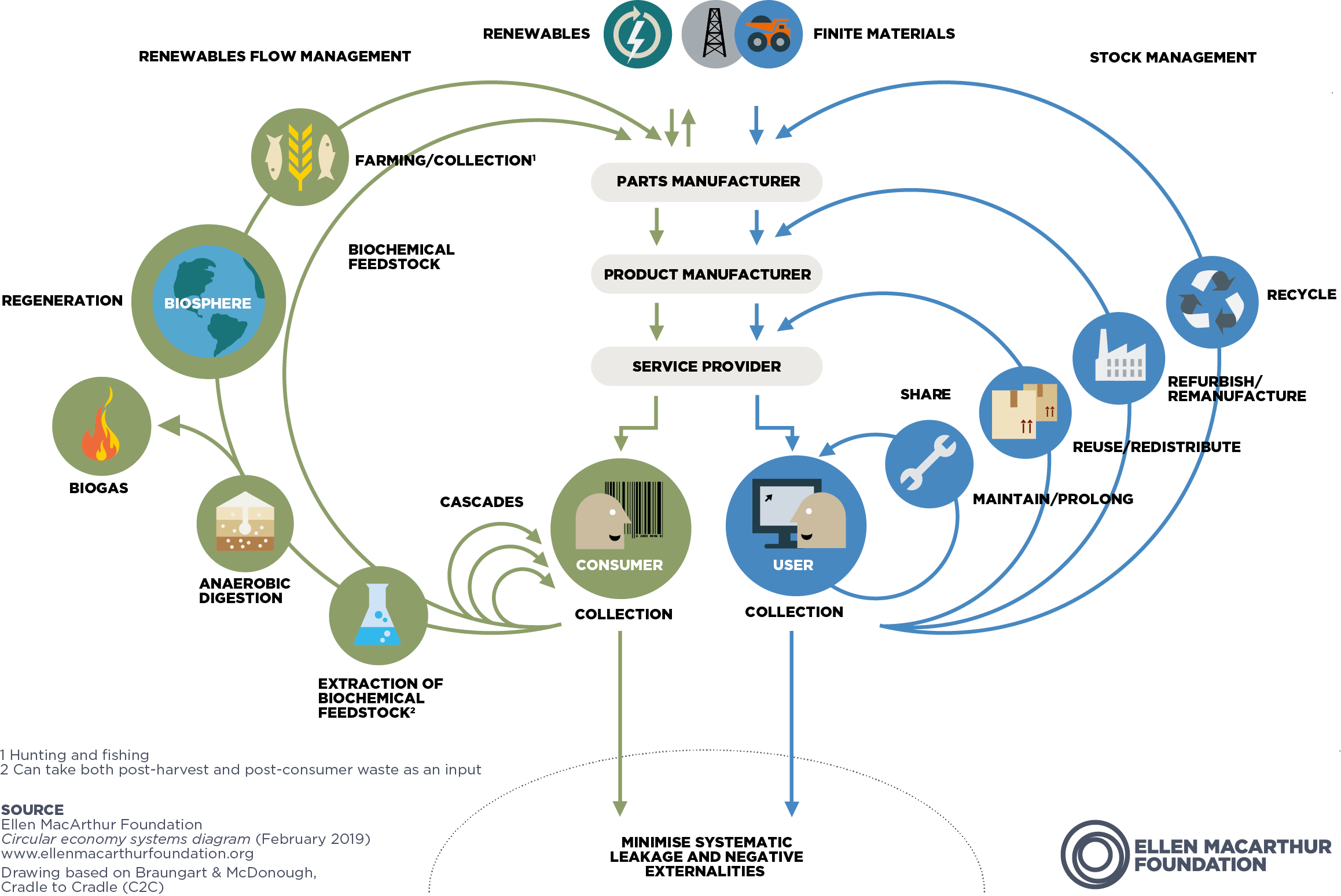
Imagine the linear economy “take-make-waste” as a one way street. With a circular economy, we start bending these lines into loops, so valuable virgin raw materials and products made from them can be kept in circulation.
The circular approach is about extending the lifespan of products, repairing, refurbishing, remanufacturing and - as a last resort - recycling. For example, instead of having a phone for only 18 months, people are encouraged to keep it for four years or more. And encouraged to consider a refurbished phone next time they buy.
It’s worth thinking about because every choice we make has an impact on our world.
The Impact on Planetary Boundaries - a Story of Climate Change, CO2 Emissions and Biodiversity Loss
The Planetary Boundaries framework is a set of nine interdependent ecosystems which create the conditions for us to thrive, and for future generations to thrive. Think about air, water, earth and raw materials and how we need them to live - or survive.
At the time of writing, we have crossed the so-called ‘safe space’ in seven of those nine areas.
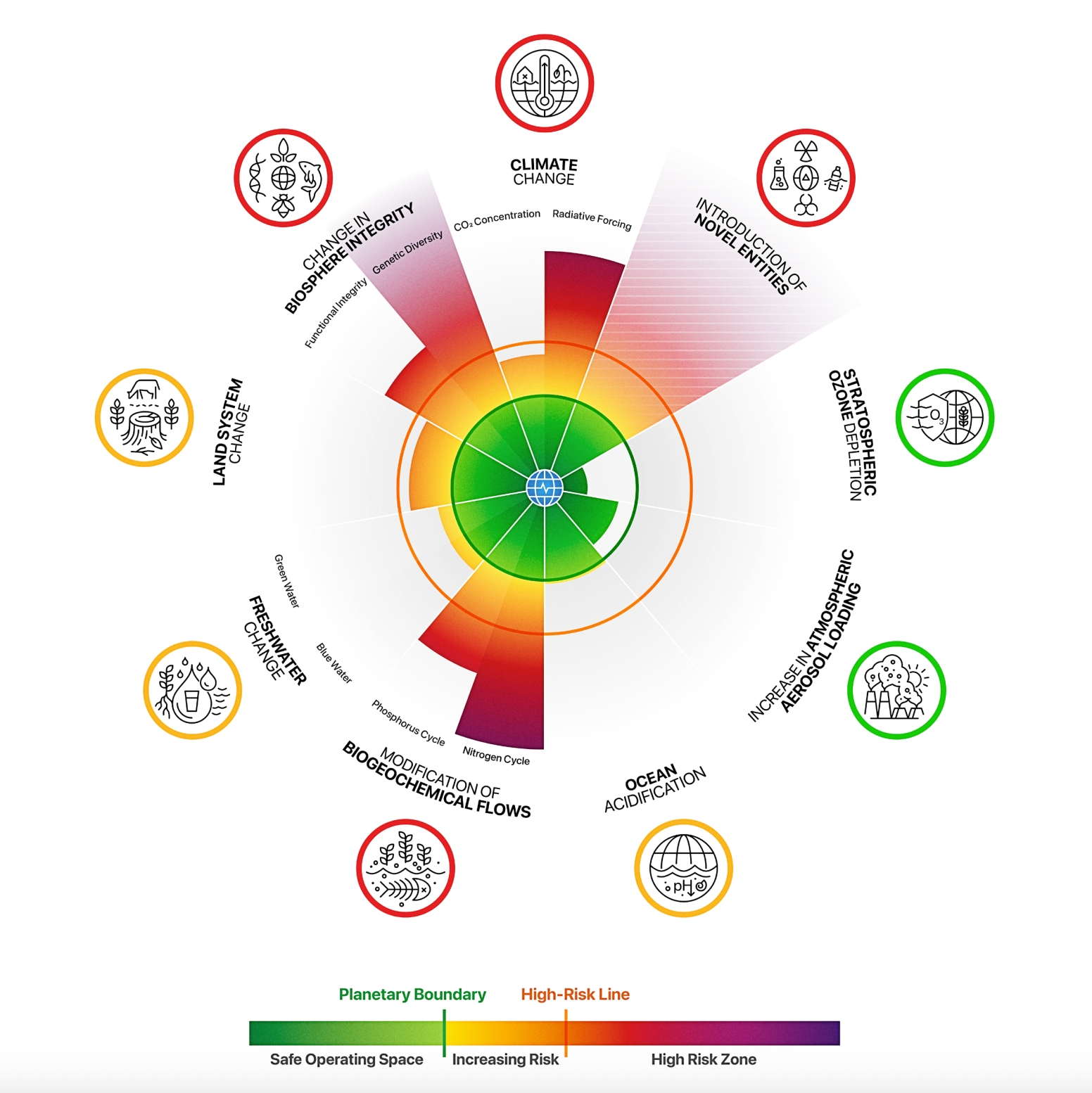
Anne explained: “When we cross that safe space, that line, we are stepping into the unknown. We don’t know what will happen in the future. We might be beyond the tipping point where we can’t reverse the environmental damage already done. It might just accelerate and be beyond our control to fix anymore.”
The current linear economy has negative impacts on the environment: CO2 emissions, other emissions and biodiversity loss to name but three.
And it can, for example, make European countries more dependent on trade partners outside of the EU, such as Brazil and China, for critical raw materials. Critical raw materials go into things like laptops, TV screens, mobile phones and wind turbines - so countries need them in large quantities to keep their economies going.
In contrast, the circular economy operates within the planetary boundaries, within that ‘safe space’.
Anne explained: “So, through circular economy practices we could reverse the biodiversity loss and basically halt the damage - from linear economy - through circular actions. We could minimise CO2 emissions. We wouldn’t be so dependent on trade partners outside the EU, for example, for critical raw materials.
“We need to look at improving our strategic autonomy and reusing those materials that already exist in those thousands and thousands of laptops, TV screens, and all electronic and electrical equipment that we already have in Europe. For example, how can we take out the raw materials from a mobile phone, and reuse them again to create and manufacture another phone?”

Anne cites the example of aluminium, which is very energy intensive to manufacture. If we were to collect and remanufacture all the aluminium, it would only take five per cent of the energy needed - that’s 20 times less energy - to manufacture virgin aluminium.
Anne added: “Circular economy would decrease our dependency on those non-European trade partners and it would also save money, because reusing these valuable materials would cost us much less.
“It’s a question of money, it’s a question of environment, it’s a question of strategic autonomy, improvement of trade deficits and of security.
“It’s why we’re seeing that some of the EU legislation applies to any company who wants to sell within the EU. So, if you’re a US-based company or Indian company, for example, you need to comply - otherwise you won’t be able to sell your products in the EU.”
That’s part of the business case for circular economy. Another part is the numbers being talked about.
The Business Case for Circular Economy - Backed by Some Big Numbers
Companies have already had years of encouragement to operate in a way that reduces negative impacts on society and environment, through the Corporate Social Responsibility (CSR) business model.
But circular economy is about more than improving the environment, important though that is. Proponents like Anne argue that circular economy is no longer a ‘nice to have’ but essential for strategic autonomy and security, sustainability and survival.
Essential for businesses. Essential for nations. Essential for the planet.
The annual Circularity Gap Report for 2026, put together by non-profit Circle Economy in collaboration with Deloitte, revealed some stark global numbers. Numbers typically ignored by indicators like GDP, which only measure activity but do not take into account the depletion or waste created by the linear economy.
Anne summed it up this way:
“For every 3 euros we make, we basically throw one euro out of the window.”
And that wasteful third is costly. Researchers and analysts for the Circularity Gap report have even put a price on it - known as the Value Gap.
The latest Value Gap, which measures the scale of inefficiencies in the linear “take-make-waste” economy, is put at Euro 25.4 trillion. (about £22 trillion, or 22 million million pounds - either way you say it, it’s a huge sum the world is losing).
A circular approach could close that gap, and add higher value to the global economy and society. And in the European Union (EU), for example, the circular path is being regarded as part of the way to achieving greater strategic autonomy and security.
A 2025 JRC report for the European Commission stated that the EU could improve its trade balance by 35 billion euros, each year, through circular activities.
Anne explained: “Those are figures of the potential. How we could capture and create value through a circular economy while, of course, creating far less negative environmental impact.
“When we talk about a circular economy, it is the idea of creating those loops instead of a one way street, avoiding creating residues and creating emissions, and tackling biodiversity loss.”
And Anne says countries - faced with global events - are recognising the competitive and strategic value of circularity.
She added: “This is a competitiveness - and very strategic - question for Europe. Because the talk about strategic autonomy, security - with these recent wars, with trade wars and tariffs - has become so present.
“So, now, more and more professionals and policy makers are realising across the board that actually circular economy is not just nice to have, that it's actually the only way forward, that we really need it for various reasons.”
The challenge also involves complexity and some big numbers. There’s some kind of leap to be made if meaningful change is to happen.
Making a Leap Towards Circular Economy
Anne has already stated the case for circular economy being a way to address geopolitical questions and concerns (as well as creating other value and benefits for nations).
But that change, she states, requires serious investment.
According to a report by the European Investment Bank and European Commission, the EU still has huge ground to make up. The report says the EU is facing an investment gap of 82 billion euros, per year, between now and 2040, to make progress with the circular economy framework, regulations and action plans currently in place.
And today’s level of funding for a circular economy represents only one per cent of the EU budget.
More big change - in thinking and action - is needed if that investment 'gap' is to be closed.
Anne said: “Money goes where it sees the biggest investment opportunities, with fewer risks, and in that sense - as the ‘investment gap’ shows - we're still at the beginning.
“And it's not just about the investment gap. It's also about subsidiaries and investments for linear, and harmful, productions or products. That's something that should be rescanned and revised - not just at the governmental level but also by different hedge funds, angel investors and banks.
“They should be asking the question, how do we encourage investments for circularity and discourage them for linear products?”
Introducing the Circular Risk Scorecard
Anne shared a story with me about work in the Netherlands to create a circular risk scorecard, to be used in decision-making and risk assessments by banks.
If a company wanted a loan to build a factory, for example, the ‘business as usual’ assessment would be based on linear economy principles - and not take into account the fact resources are finite. By contrast, the circular risk scorecard incorporates that element in the assessment and therefore represents a fairer reflection of the overall risk.
Anne said: “When these type of instruments are integrated in financial institutions and risk assessments, then the boat or the ship starts turning. But the work needs to advance and speed up because we are very much behind, especially in the finance sector.”
If the idea works in the Netherlands, it could work in other countries, too. It’s a case study.
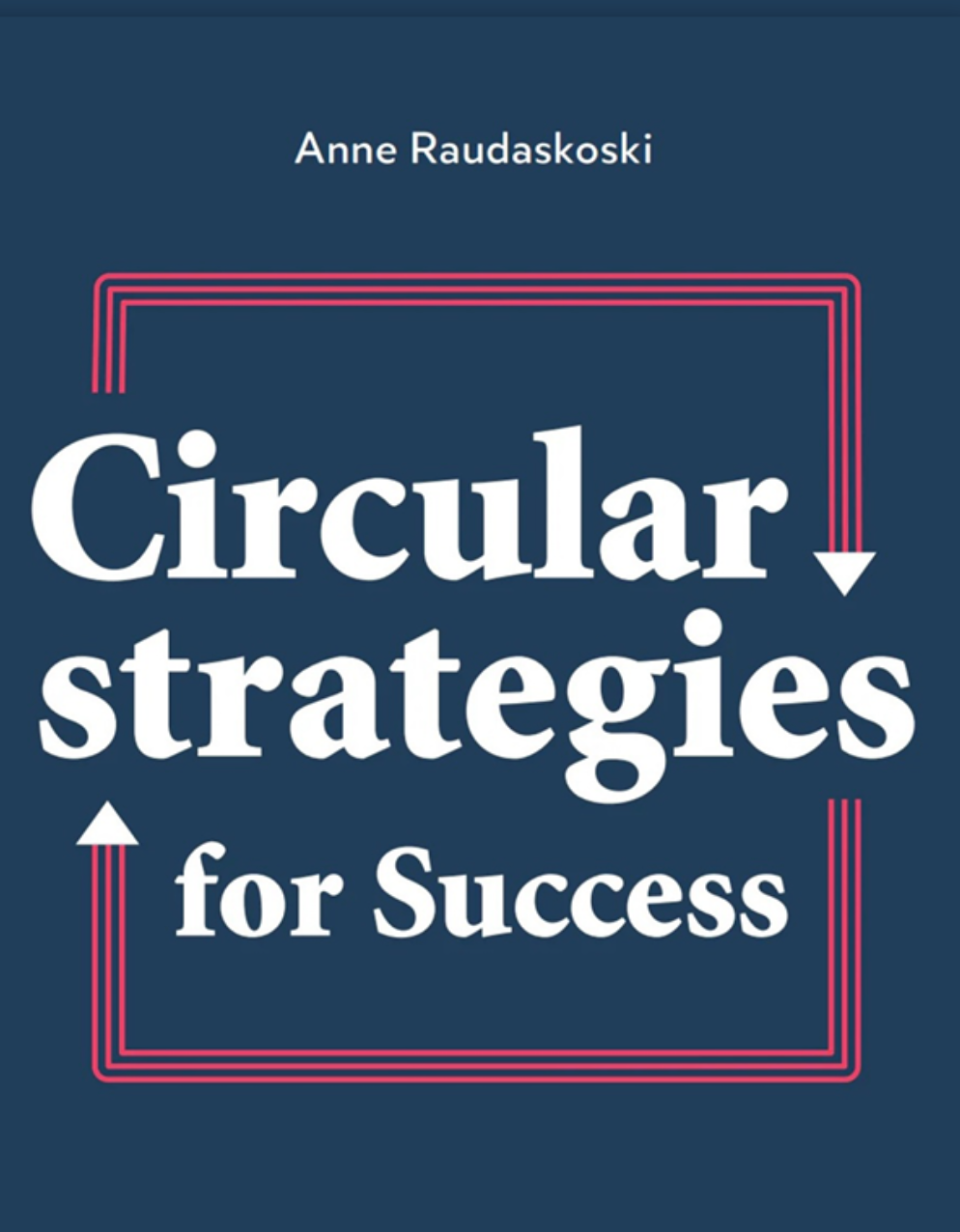
The type of case study you’ll find in Anne Raudaskoski’s book, Circular Strategies for Success.
From Practice to the Page - How the Book was Born
As a circular economy consultant and expert, Anne has helped many different companies to navigate through the often complex challenges involved.
Since 2016, she has designed and run circular design programmes and circular business development programmes - in different formats - for a range of organisations. These include a year-long national circular design programme for 50 companies in Finland and an 8-month Nordic version for 30 Nordic companies.
During the past 10 years, Anne has developed a systematic and holistic approach to circular strategy. Her experience from numerous programmes provided learning, insights, stories and case studies.
She had always wanted to write a book. Now she had the ideas and extra incentive to turn her long term dream into a reality. Circular Strategies for Success was published in Finland in 2025 and is being co-published for an international audience in 2026.
"I really wanted to offer something inspirational" - Anne Raudaskoski
Anne said: “By 2024 I just had a very strong intuition that I had gained so much experience and so many insights, that now it was time to write the book. I really wanted to offer something inspirational, using a lot of stories and case examples I used in my programmes.
“I’ve come to realise that with business leaders, if you can catch their attention and get them inspired (and usually just one good story or case study can do that), it can create a space where they start thinking ‘Hang on, there might be another way of doing business’.
“When they see a beam of light somewhere there, away from a very fixed mindset, there’s a tiny opportunity and tiny pause when they start rethinking - then the rest is just restructuring and organising.
“I’ve come to learn that for companies, when we talk about circular economy, it’s not easy to know where to start. What I’ve done over the years, as a consultant and expert, is to help them navigate in that sometimes complex environment.”
Circular Strategies for Success - What’s Inside the Book
When Anne talks about circular economy, she often uses the word ‘design’.
This is because she sees linear economy as the model we (humans) have chosen as the way to operate and do business. The “take-make-waste” system is not running by accident but built by design. Circular economy, Anne argues, is a way we can design differently for better outcomes - financial, social, political, environmental and security.
It’s no surprise, then, to see careful design go into the structure of her business book, Circular Strategies for Success.
The book is a hands-on toolkit for organisations and professionals, with tools, templates, stories and case studies. The book is divided into four parts.
Part 1 - Systems Design
This section provides some context, and introduces key concepts and different frameworks. As Anne says, it serves as “a kind of ‘crash course’ on circularity, planetary boundaries and the key differences between linear and circular economy”.
Part 2 - Business Design
This section is aimed at management team and board members. It aims to help them understand what is meant by circular business models, how that can be translated into their own operations and why business design matters.
Part 3 - Service Design
Anne says this aspect, often overlooked in debates and publications, is vital for success. Companies must ask themselves, “Why would our customers want circular products?”. If there’s no demand, there’s no business.
Part 4 - Product Design
This section is aimed at R&D (Research and Development) people, such as engineers and designers. It helps them to understand the value of circularity principles and how to use them to create circular products.
Three Key Points for Business Leaders to Consider from Circular Strategies for Success
Naturally, Anne regards all four parts of the book as important but, if ‘nudged’, would say Part 1 is probably the most important.
Anne explained: “The way I wrote it, I wanted to create that mental space and try to get the reader to take a deep breath... and think, “Okay, what are we talking about here?”... and maybe explore his or her own worldview, which we so often take for granted and take as an objective truth.”
Which is why Anne shared the fish story with me, to illustrate that point.
When business leaders are curious, open to (self) reflection and asking fresh questions it can ‘nudge’ or change their worldview - and lay the foundations for adopting a circular approach.
And there are three key points Anne would like readers of the book to take away with them.
- See the Bigger Picture
We are all part of an interconnected world - as businesses, public organisations, cities, municipalities and individuals. Systems thinking, as a tool or discipline, is very much needed and very useful to learn. - You have the Power to Redesign the Future
Our realities and our future are not something given. We have designed it and we are designing all the time, which means we have the power to redesign business and the world for the better. - Circularity is a Matter of Your Survival and Competitiveness
Circular economy is not just a question of ‘heart’ and doing more ‘environmentally friendly’ business. It is a question of survival and competitiveness.
The ‘Nudge’ which Started Anne Raudaskoski Towards a Career in Circular Economy
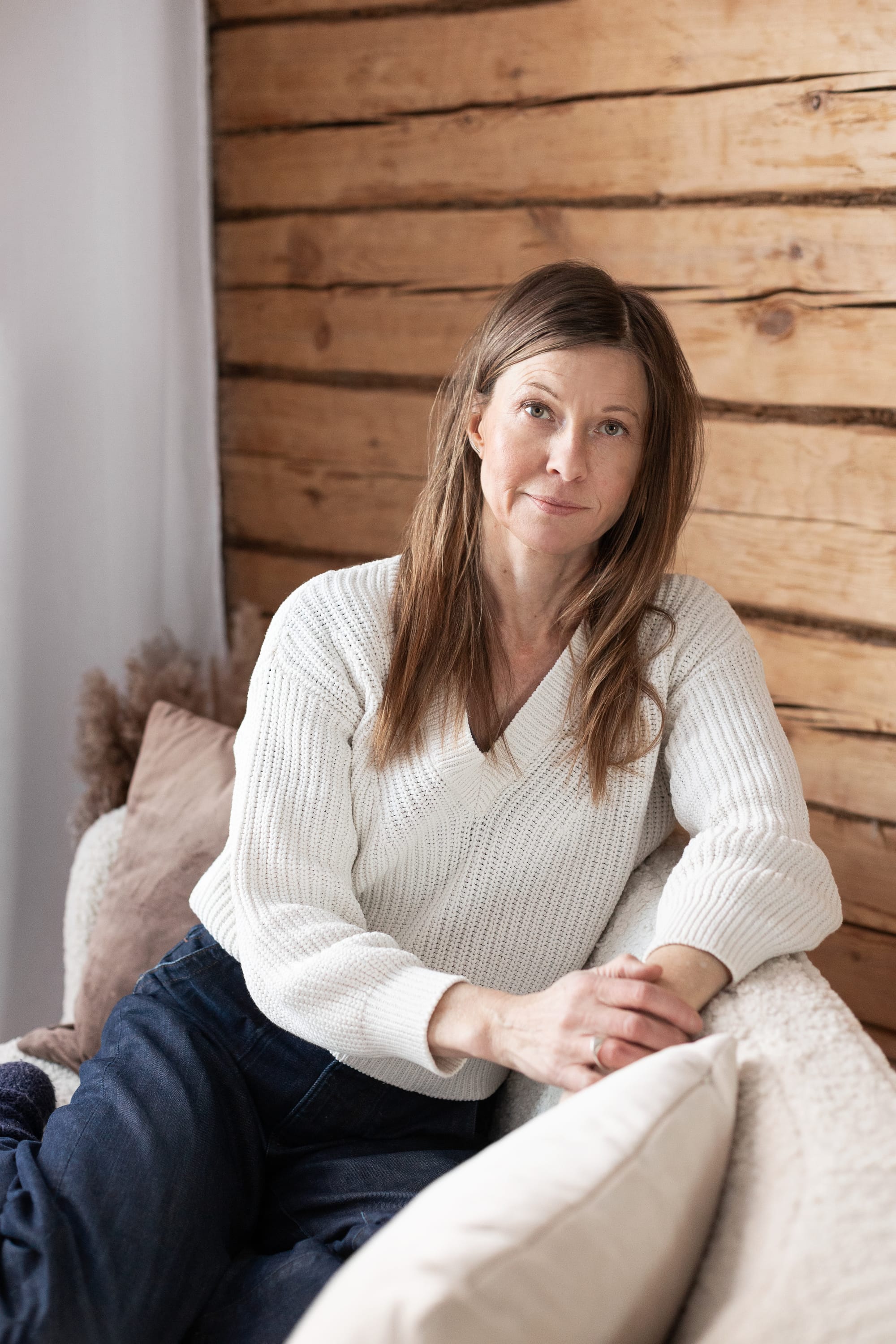
Anne talks about how it can take just one ‘nudge’ to change a person’s worldview.
She speaks from 20 years of professional practice in the field, working with business and municipal leaders, but also from her own personal experience.
In 2006 she was at a crossroads in her life. Finishing studies in international relations she was thinking about what her future career would be when she saw something on a colleague’s computer screen that would change her life.
Anne takes up the story: “I was about to change careers, and then I literally saw on my colleague’s screen a description of Corporate Social Responsibility [CSR].
“I was still looking for what to do next after my studies, and I saw the description that companies could be a force for good. And it hit me, and I thought, ‘This is what I want to do for the rest of my life’. And that's how it all started.”
The avid student immersed herself in the subject. She studied “everything there was to study” about sustainability and CSR, attended seminars in London and learned from sustainability leaders.
Experiencing that 'Lightbulb' Moment
And it was reading an article by Ellen MacArthur, explaining circular economy, that delivered a lightbulb moment for Anne. She realised circular economy offered the tools and frameworks to fill the gaps that CSR had failed to reach, when working with companies around sustainability.
She said: “That was a defining moment for me, when I realised that sustainability and the framework didn't quite succeed in what it was supposed to do. To me, circular economy provided a more solid framework to help businesses, but also showed a way to redesign our economies and societies.”
Anne worked as a sustainability manager in England before moving back to her native Finland, to set up Finland’s first circular consultancy in 2013. Since then, she has worked with numerous companies, public organisations, ministries and cities - across different sectors, in Finland and internationally.
With companies, she typically works with them to develop their strategies and roadmaps, or circular design guidelines. Assisting R&D teams and helping companies to understand what their role in new value chains is or should be.
Currently based in Spain, Anne is working with the Government of Navarra to develop a circular economy training programme for business support organisations and integrate circularity into public procurement practices.
A Message of Hope and Redesigning the Future
I asked Anne whether there was one main message from the book that she wanted to get across. Not always an easy question for an author to answer. This is what Anne told me:
“The feedback that I've gotten from readers is that the book gives hope. This might sound like a soft aspect but, actually, hope is so important. When you have hope, you also have an understanding that, ‘Hey, we might design differently’.
“It goes back to the word design. Because sometimes it's seen and perceived as how do I design a laptop? Or how do I make it better? But, actually, I'm talking about systemic design.
“So, how do we design systems? How do we design business systems in a way that they align with planetary boundaries and facts? And how do we stop wasting money and finding more intelligent ways to operate?
“There are many concrete tools that you can use to start redesigning your business. I think that would be the key message. And it's not utopian, it's perfectly feasible and doable.”
One Step Every Business, Municipality and Individual Can Take Today towards a Circular Future
I always say to people that each and every one of us can make a difference in the world. Reading about ways to change things for the better is one thing. Doing it is another.
Here is ONE step Anne invites you to take today.
ONE Step for businesses, is to realise that circular economy is a strategic question and should be the basis of your innovation.
ONE Step for cities and municipalities, is to ensure that your policies - and, especially, your procurement practices - demand circular solutions.
ONE Step for individuals, is to understand that you don't vote just once in four or five years, you vote every day through your purchase decisions. So, every time you buy, you are either raising better and circular futures or not. In short, every time you buy, you vote.
What steps or decisions are you going to take for a more positive future and better outcomes?
Gary Spinks is a copywriter, storyteller and journalist. Beyond Scotland covers the interconnected themes of sustainability, community (including Citizens and Transition Town projects) and Responsible Tourism & Travel.
Resources to Explore:
To discover more about circular economy, Anne's book and the reports cited in this article, explore the links below:
. Check out the book Circular Strategies for Success by Anne Raudaskoski (International Editon).
. Visit Anne Raudaskoski's website.
. Get a summary of Corporate Social Responsibility - A definition and background from Wikipedia.
. Explore the Planetary Boundaries through the Stockholm Resilience Centre and view the latest planetary report via the Planetary Health Check website.
. Watch a video of the Fish Story by David Foster Wallace (video duration 5 mins 12 secs).
. Read the report ‘Circularity Gap Report 2026: The Value Gap’ (by non-profit Circle Economy in collaboration with Deloitte).
. Read the report ‘Transitioning to a Circular Economy: Closing the Investment Gap’ (by the European Investment Bank and European Commission).
. Read the report: ‘Capturing the Potential of the Circular Economy Transition in Energy-Intensive Industries' (By the Joint Research Centre, or JRC, for the European Commission).
. Visit the Ellen MacArthur Foundation website or take a closer look at the circular economy butterfly model they share.
. Check out the Circular Risk Scorecard and explore the context behind it.