Meet Me In Govan: The Walking Tours that Place Friendship, Health, Support and Community at their Heart
Journalist Gary Spinks travels to the south side of Glasgow to experience walking tours with a difference. He discovers an area of the city with a fascinating history, positive stories to share, and deep connections to health innovations - past and present.
Though I moved to Glasgow earlier in the year, this is my first trip to Govan. Arriving way too early for the walking tour, I decide to go for a wander down to the riverside before heading for the meeting point.
Within minutes I am standing along the banks of the River Clyde that splits the city into north and south. A river with a famous and illustrious shipbuilding history and heritage.
I'm standing at the Wharf viewpoint next to the Govan-Partick footbridge, which opened in September 2024 and provides a pedestrian and cyclist link between the two districts.
Across the water, on the north quayside, sit two of Glasgow's most distinctive tourist attractions, the Tallship Glenlee and Riverside Museum. I could watch the river scene for hours but, after a quick coffee in the Maple Leaf Bakery, head towards the walking meeting point to find the tour group and guide.
Part 1: The Walk and Points of Interest in Govan
The Meet Me in Govan walks take place every Thursday and begin outside the Pearce Institute at 10.30am. And it's here where I meet other people going on today's walk and today's guide, Silvana.
At a quick count, there are at least 15 of us all together in the group this morning, a nice size for a walking tour.
Most of the people live in or on the edge of Govan but anyone can join the walks, whether they are local, live in Glasgow, are based in Scotland or are visiting from elsewhere in the world. The tours are often joined by residents from the local Florence House care home.
Silvana introduces herself, the walk and the Meet Me in Govan walking tours, a project created through the social enterprise Invisible Cities. Today's walk is also part of a health walk programme organised in partnership with the Health Innovation Hub, our final destination.
We learn from Silvana that our meeting point in Govan Road, the Pearce Institute - known locally as the PI - was designed by Sir Rowand Anderson and gifted to the local community by Lady Pearce, in memory of her late husband, Sir William Pearce.
It was under the management of William Pearce that the Fairfield Shipbuilding and Engineering Company became one of the country's best warship and passenger liner builders. Its story can be explored in the Fairfield Heritage community museum, one of the stops along our route today.
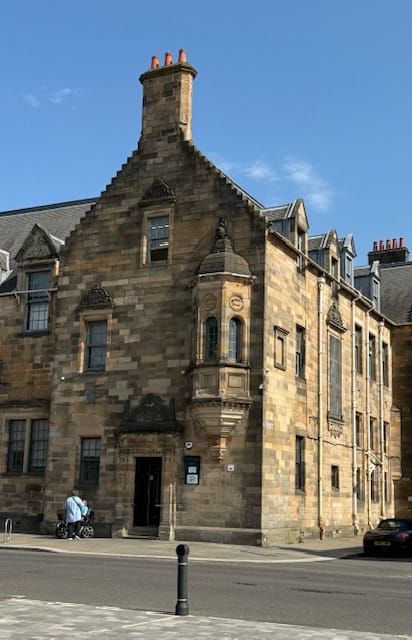
Today, the Pearce Institute is home to community groups and other organisations set up to help and support the people of Govan. It has meeting rooms, a cafe and The Govan Pantry, a subsidised community shop to help families get food at reduced prices.
From the Pearce Institute, we pass near Govan Old Cemetery and the Govan Stones Museum, which holds an important collection of early medieval sculpture. We are not going inside on this tour but I make a note to return another day and check out the historic Govan stones.
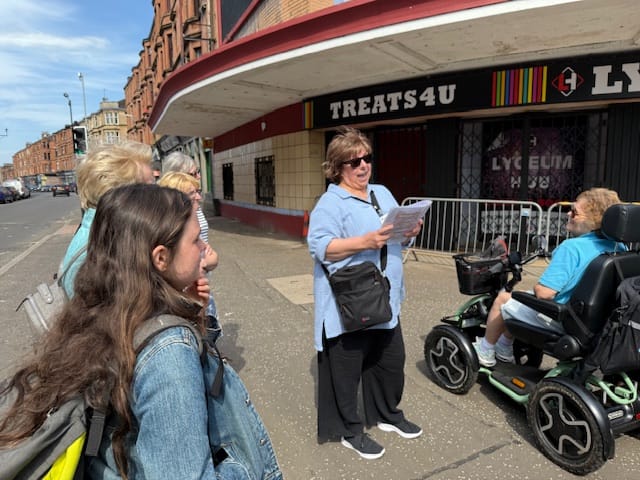
Our next stop is the old Lyceum cinema building. Silvana tells us about its history and Angie - another Invisible Cities guide, who is supporting Silvana today and know's the area well - shares a memory or two about the place. It was a dance hall at one time and bingo was played there.
A short walk from the Lyceum is the home of Sunny Govan Radio, a charity and community radio station. Meet Me in Govan (MMiG) has been featured on it a few times and has even been given its own regular slot, hosted by MMiG coordinator Michaela Ditrichova, who is part of the Invisible Cities team.
We continue westwards along Govan Road and stop outside the Fairfield Heritage shipbuilding museum. Silvana tells us the fascinating story of how a Glasgow-born engineer who pioneered an innovation for improving ship safety also co-created the first medical ultrasound machine for hospitals.
We're not going into Fairfield museum today but it's another place I note to visit another time.

Glasgow has plentiful green space. Indeed, it's known by many as Scotland's "Dear Green Place" for that very reason. And Govan has its own green treasure, Elder Park.
Our guide Silvana has a quiet and calm voice, and it's clear that she has done her research on the area. Silvana tells us about the remarkable philanthropist Isabella Elder, who donated the park to the people of Govan, was responsible for the building of the park's library, provided funds to build Elder Cottage Hospital, and was at the forefront of promoting the education and training of women, especially in medicine.
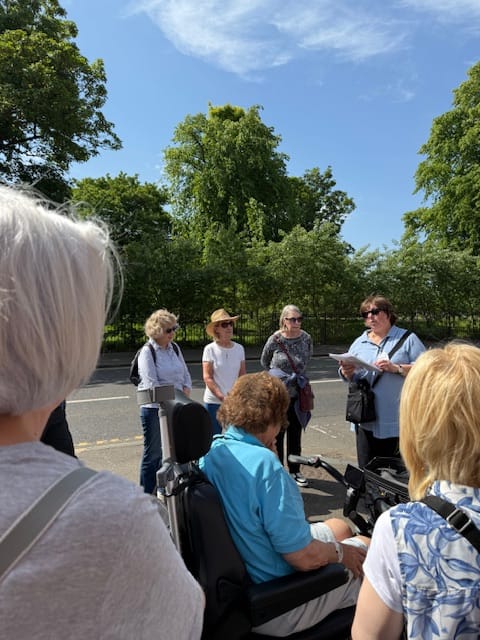
Elder Park is a beautiful green space. If you are ever in Govan do take the opportunity to spend some relaxing time there.
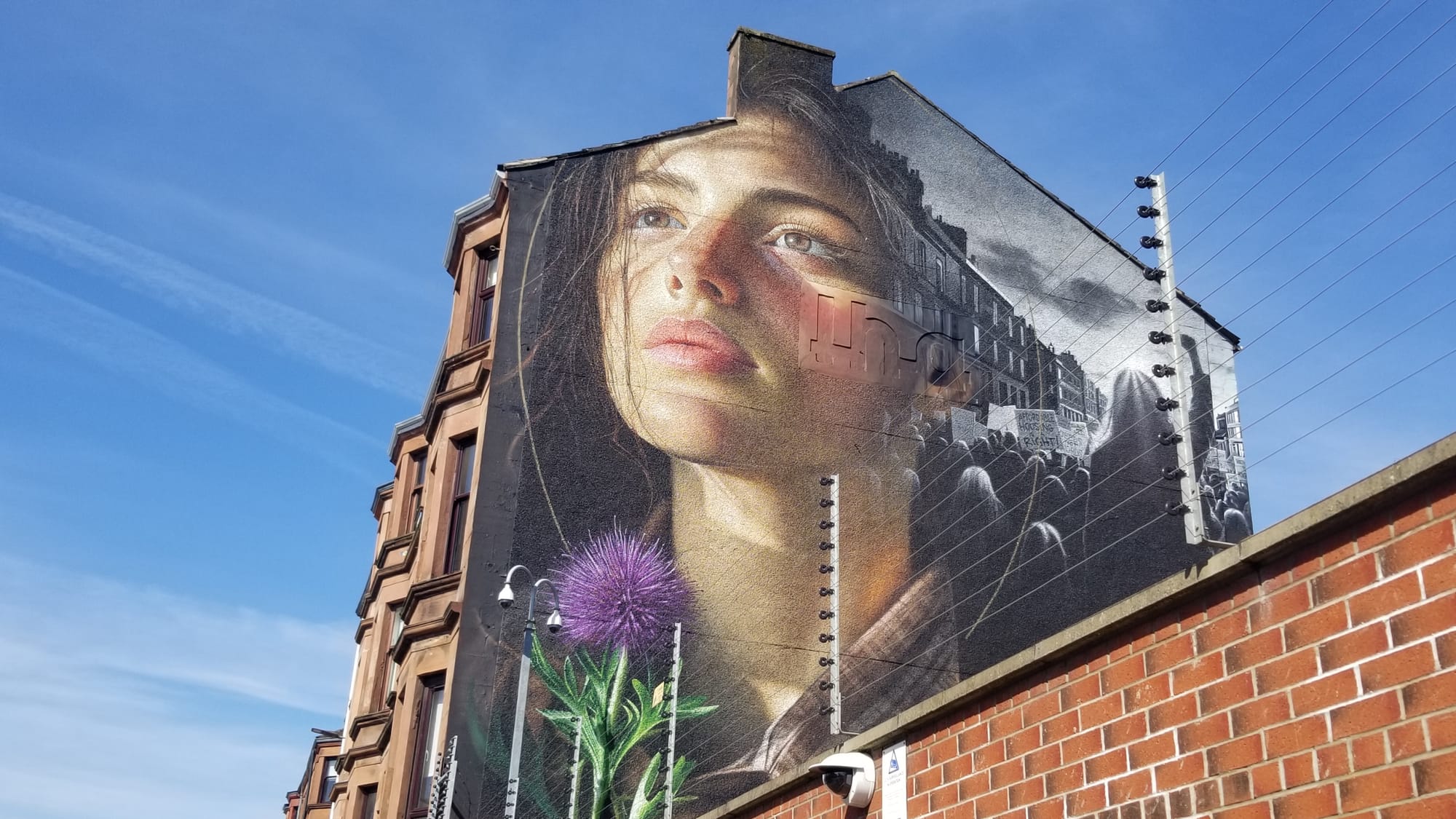
Another thing of beauty is the amazing mural of Mary Barbour (or a representation of how a young Mary Barbour might have looked). She was a Scottish political activist, closely associated with the Red Clydeside movement and a main organiser of the women of Govan who took part in the 1915 rent strikes.
Painted in May 2025, the mural stands proudly on the side wall of a tenement building opposite the north-western corner of the park.
From here, the walking tour enters its final leg. We are guided to a path overlooking the Clyde Tunnel. This is the road tunnel which runs underneath the River Clyde to link the south side and the north side of the river.
What many people do not realise is that you can also walk or cycle through the tunnel. Meet Me in Govan do a guided walking tour through the tunnel so if that sounds interesting you might consider doing that next time you're in Glasgow.
Whilst watching the traffic speed through the twin tunnels ahead of us, we listen to Silvana telling us about Elder Cottage Hospital and the story of a nurse - together with a link between the hospital and Florence Nightingale.
Today's walk is almost over. But it has not been an ordinary walking tour. This tour was one of a programme of health walks organised between Meet Me in Govan and the University of Glasgow.
At stopping points along our walk, Silvana has not only been sharing stories of people and places. She has been encouraging participants to think about their physical health - the theme of today's health walk - and the benefits of walking.
The pace of the tour has been gentle. People of any ability can take part in a Meet Me in Govan walk, as illustrated by one of the participants today riding their mobility scooter safely along the route.
Repeated studies and surveys have shown that walking is one of the best forms of exercise and a good way to improve health and wellbeing.
Fitting then that our walk should finish at the modern Health Innovation Hub, where we would be given refreshments, listen to a talk and be offered a tour of the building.
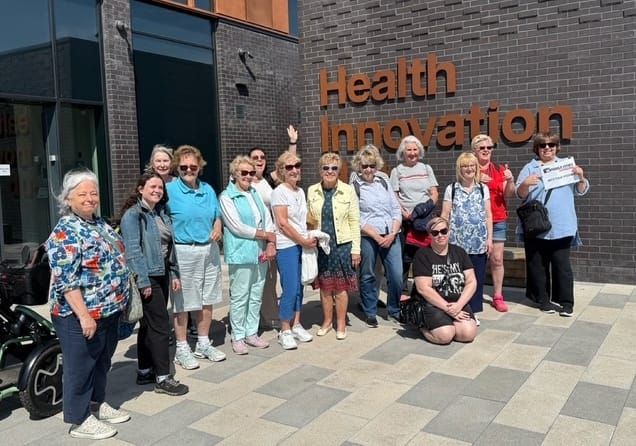
After a successful walk on a beautiful and sunny day, it was time for a group photo.
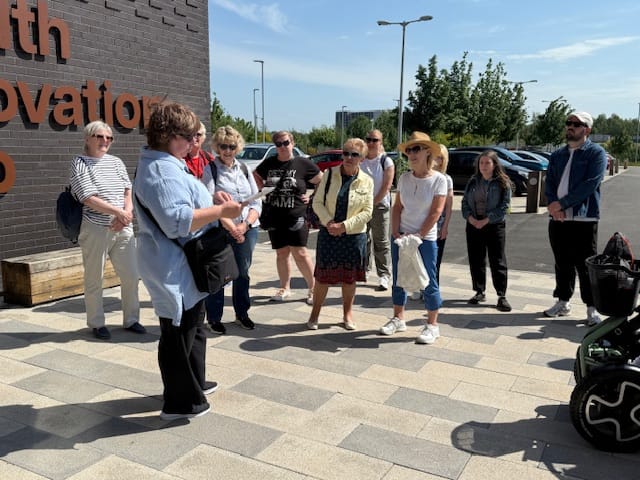
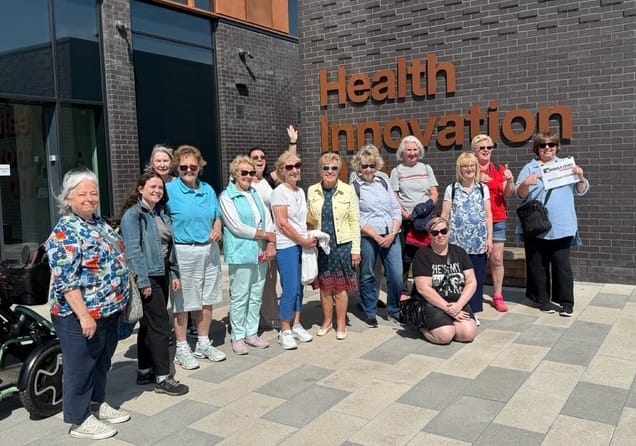
Silvana was an excellent guide. Very calm, very knowledgable and delivered the walking tour at a gentle pace so everyone in the group was together and felt safe. She neatly weaved in some points and questions around health along the way, covering the importance of food, water and exercise.
Silvana is part of the Invisible Cities team which runs the Meet Me in Govan project. Invisible Cities is a social enterprise that trains and employs people who have experienced homelessness or social disadvantage to be walking tour guides in cities across the UK.
Before I say more about the health walk and visit to the Health Innovation Hub, let's find out a bit more about Silvana.
Part 2: Meet Your Invisible Cities Guide - Silvana
It's no surprise for me to learn that Silvana loves research, learning and storytelling. The walking tour she is leading today is filled with information and stories associated with landmarks and buildings.
Though quietly spoken, Silvana speaks with confidence and calm authority. She guides the group along the tour route with care and consideration.
Born in Argentina, Silvana grew up in Northern Italy and arrived in Glasgow several years ago. She discovered Invisible Cities after attending a job fair in Paisley and expressing an interest in being a walking tour guide.
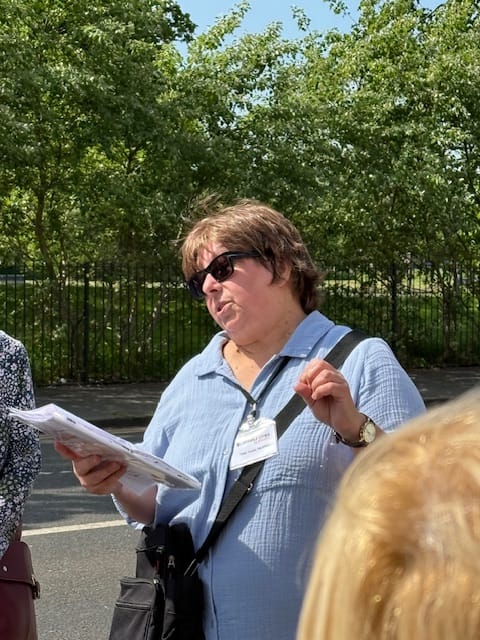
Silvana took a 6-week training course with Invisible Cities, learning about things like public speaking, building confidence and customer care.
Speaking on Sunny Govan Radio about the experience, Silvana said: “[The training] really helped me to build my confidence. I’ve been an anxious person, a very shy person, and being involved in this, talking to an audience, that training was really helpful.”
As a guide, Silvana is interested in research, finding interesting stories about people and places, and helping to develop new walking tours. Learning, a love of history and archeology, collaboration and storytelling are at the heart of what she does.
Silvana has been involved in developing the Riverside Tour in Glasgow for Invisible Cities, a collaboration with SWG3 and Yardworks for the 2024 PARK XR project, a Clyde Tunnel walking tour and supporting community research through the city's GALLANT sustainability research project.
Her favourite walk to lead is the Riverside Tour, a walking tour she helped to develop with Invisible Cities.
Silvana told Sunny Govan Radio: "As soon as I started to learn about [the Riverside Tour] with the script that was already done, I was already really, really drawn to the the rich history on the Clyde.
"So, the massive shipbuilding in the late 1800s, but not just that. It's, to me, still fascinating to see how that area after the shipbuilding collapse in the late 1960s, how after a period of wasteland, now is a really flourishing entertainment area, so you can see that the land is completely transformed."
Through reading articles, researching and watching YouTube videos, Silvana has uncovered new stories to build into the walking tours and support community research.
Silvana said: "This kind of combo, researching and working, is allowing me to put in perspective the right script content, so we can deliver information in a positive and an enjoyable way. So it's good to see that every week there are new people joining us on the walks. It's amazing."
Thanks, Silvana.
Part 3: The Health Innovation Hub - A Partner for Pioneering Health
After the group photo at the end of the health walk, we were welcomed inside the Health Innovation Hub. It is a smart, modern building that feels a little out of place in an old industrial area and I wonder how many Govan residents even know it is there, or what it is there for.
To answer that question, I spoke to the Hub's community engagement officer, Georgina Aitchison.
Georgina told me that the site for the Hub was chosen for several reasons. The location has historic links with the respective work of Isabella Elder and Dr John Aitken towards medical training and medical advancement, is near to medical partners, and is part of a regeneration area.
The Health Innovation Hub is, as the name suggests, developing health innovations which could improve the lives of people in the local community and nationwide.
Georgina said: "It’s an underrepresented area with multiple barriers. What we do here could help rest of Govan and Scotland. People of Govan can help us with that, as pioneers in development of health innovations."
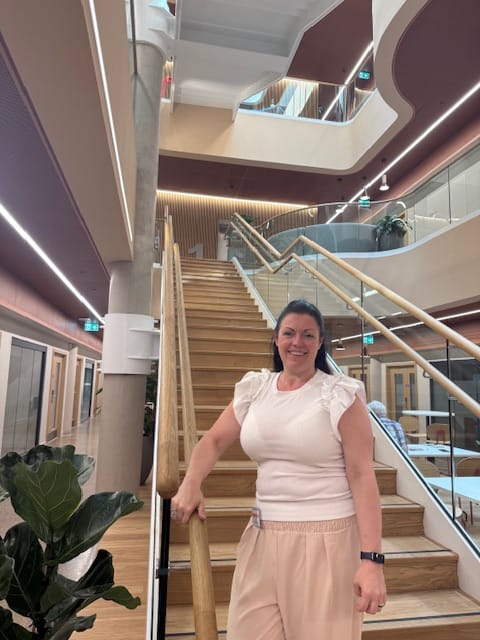
The health walk Silvana took the group on today was part of a programme of six walks, each one starting at the Pearce Institute and finishing at the Hub. It is a partnership project between Meet Me in Govan and the Hub.
When Georgina started her role, she began checking out local groups and discovered Meet Me in Govan walks. She reached out to MMiG project coordinator Michaela Ditrichova, joined some of the walks and together they came up with a plan.
Georgina added: "Generally, I was trying to explore doing different activities for different needs and opportunities to hear about things in different ways. This health walk was one idea."
The Hub is exploring how digital technology can provide new applications and digital tools for health, and can show people how to use them. The Hub has a cafe which is open to the public and is also keen to do community outreach.
Georgina said: "The café draws people in. It’s open to the general public. Inside, the Hub team can tell them about PPI (patient and public involvement) groups in the building and more about what is happening in the building.
"We want the community to feel the Hub is part of their community, a safe and welcoming space. We want our partners to be able to speak to people for their lived experience, and have different events and discussions.
"We want to offer access to different ways of working and managing things in life, managing health difficulties, people helping others with health conditions and being the first to hear about something when it’s out (and trial it)."
And it is in the Hub cafe where I took the opportunity to ask people on the walking tour what they thought of it - and why they take part.
Part 4: What People Say About Meet Me In Govan Walking Tours
Most people find out about Meet Me in Govan via social media, the internet or through word of mouth recommendation. The project has its own Facebook page.
Here is what some people on the walk said about the walking tours in Govan.
Janet said: “It encourages you to get up and out if you know you have a set purpose. There is always something different and interesting about the walks.
“I have lived in the area a long time but have learned a lot from the guides. Some things I didn’t know. You can take things around you for granted and these walks have helped me to see it differently.”
Aileen, who volunteers at The Pantry at the Pearce Institute - where the walk began - moved to Govan in 2025.
She said: “I enjoy the walks. The health walks have covered the same route each time but they do other walks as well - exploring the murals, going through the Clyde Tunnel and visiting SW3. The walks are interesting and it’s a good group.”
As well as the stories and exercise along the walks, Meet Me in Govan has a strong social aspect, too. Not everyone can make the walks or do the walks but they can still meet with friends along the way or at the end.
John, who is retired and lives in the greater Govan area, joins for part of the walks or meets the group at the finish point.
He told me: “If the walks are too much for me I come along for the social aspect, seeing people at the venue at the end. I enjoy meeting friends, a bit of exercise and learning about the history of the area.”
People don't have to live in Govan to join the Meet Me in Govan walks. People can just turn up and enjoy the tour (and if a group of people want to join a walk they can let organisers know in advance, to help with planning and keeping everyone safe along the route).
Walking routes are described as accessible for all.
Barbara, from Erskine, covers the health walks route using her ‘off road’ mobility scooter and enjoys taking photographs along the way.
She said: “I don’t really know anybody but everybody is lovely and I really enjoy it. The guides somehow remember your name.
“Before these health walks, I didn’t even know the [Health Innovation] Hub existed. And at the end of each walk we hear speakers from the Hub.
“You learn about Govan as you go, at stops along the way, and I never truly appreciated all the women who had such a prominent role in the past that we have to be thankful for. I hope more people find out about it and join the walks.”
Part 5: A Quick Tour of the Health Innovation Hub in Govan
The Health Innovation Hub building in Govan officially opened in March this year.
The state-of-the-art life sciences laboratory facility was developed by and is operated by Kadans Science Partner. The Dutch-based company leases space to research companies and its partner, University of Glasgow.
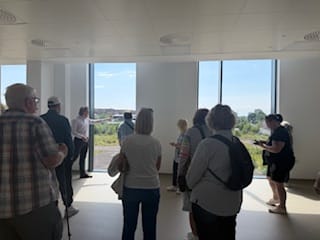
A Scottish Enterprise project, the Hub aims to be a world-class centre for research, innovation and collaboration. During our visit at the end of the health walk, members of the walking group were invited to go on a tour of the building.
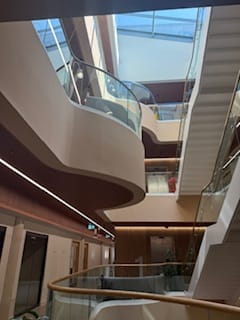
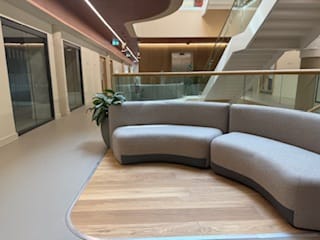
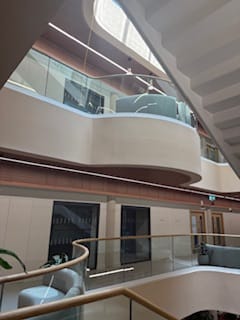
The interior of the Hub is a striking design, complete with grand stairways and flowing curves. We are told that the shape and colours of the building were inspired by colours associated with local ships.
Here is what it looks like inside.
Part 6: Learning about Digital Health Tools at the Health Innovation Hub
Before the tour of the Hub, there is a talk.
Each week of the health walks, the visit to the Health Innovation Hub gives people on the walk a chance to rest, chat and enjoy some refreshments. It also gives health professionals a chance to talk to the group about work or research that is going on at the Hub.
Today, it’s the turn of Dr Nicola Carmichael, Clinical Innovation Fellow at the University of Glasgow’s Digital Health Innovation Lab (DHVL).
She talks to the group about digital health technology, and how they would like people in Govan to take part in research to help get new tech ideas right.
Dr Carmichael tells the group about how how the Hub wants to use the lived experience of patients to shape experiences. The technical term for that is Patient and Public Involvement, or PPI for short.
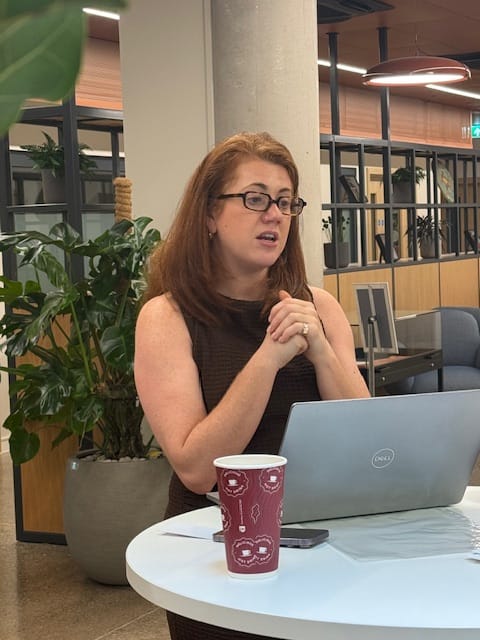
Dr Carmichael explained that research was both quantitative (involving statistics to see what is happening, improve efficiency and results) and qualitative (why it matters, how people experience things and adding depth to the numbers).
She believes there is a need to improve the quality of digital technology tools for monitoring, managing and improving people's health.
Dr Carmichael said: "There have been a lot of digital tech tools created but 50% end up not being used. [That's] because patients have been excluded from the design process - and innovators have not thought of all the things they need to consider. That doesn’t help patients and wastes money."
Dr Carmichael gave the example of a wearable device for women’s health that excluded patients with Parkinson's disease.
She said the Hub wanted PPI to involve local residents in tests and health tech trials, create focus groups (where people get paid to attend and give their views) and find Govan people who would champion the health tools they use and like.
It was all about finding people who have a particular health problem, asking those people what matters to them, designing a prototype with the people, putting the digital tool out there and evaluating its performance over time.
To illustrate how far advances in tech innovation have come along, Dr Carmichael takes the group to a training room where there is a 'lifelike' simulation manikin lying on a hospital bed.
The "patient" is used to train doctors and nurses in how to deal with different situations and scenarios. Video cameras around the room allow an assessor to monitor (and instruct) how students or professionals move around and work with the patient.
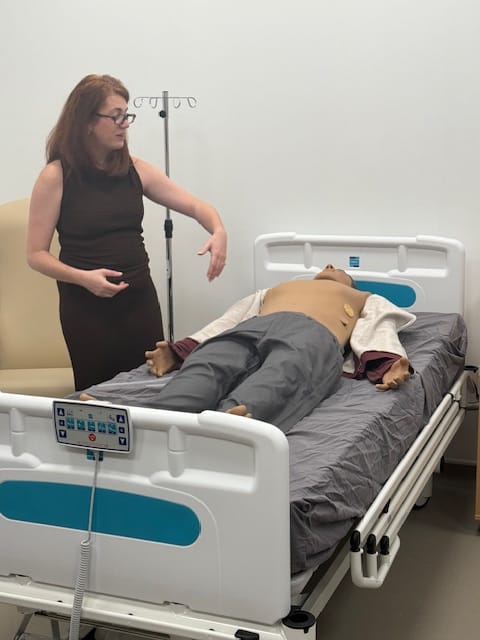
Using a high-tech and lifelike "dummy" like this has many advantages. It gives healthcare professionals and students a chance to carry out physical examinations, run diagnostic tests and practise their skills before working with real patients.
All done in a safe, risk-free setting. Working with manikins that are lifelike and can be controlled to simulate conditions and how a human might respond to treatment. And not just safer. Also cheaper and easier to do than finding and organising real patients for training purposes.
The health walks and visits to the Health Innovation Hub are just one of the collaborative projects organised by the Meet Me in Govan team.
Part 7: About Meet Me in Govan Walking Tours and Coordinator Michaela Ditrichova
Meet Me in Govan is an offshoot project of Invisible Cities, a social enterprise that runs unique walking tours in various cities across the UK, including Glasgow and Edinburgh.
The MMiG project has been going for four years and in that time more than 1,377 people have joined a walk along the streets of Govan and beyond.
The Meet Me in Govan walks are organised by coordinator Michaela, together with the project's two guides, Silvana and Angie. When one guide leads, the other guide supports. And Michaela is there to encourage and help the guides lead interesting and safe walking tours.
For example, I like the way Silvana (who was leading today's walk) gave the group some information and Angie was able to add her own memories and anecdotes to the story. And those on the walk felt comfortable about sharing their own memories and stories, too.
That helps to make each walk feel different, special, even if the route is a familiar one.
People on the walk said they joined for fresh air and because it got them "out and about". The group was friendly. The walk was social, a chance to meet people and make friends. And along the way they learned things about the place where they live.
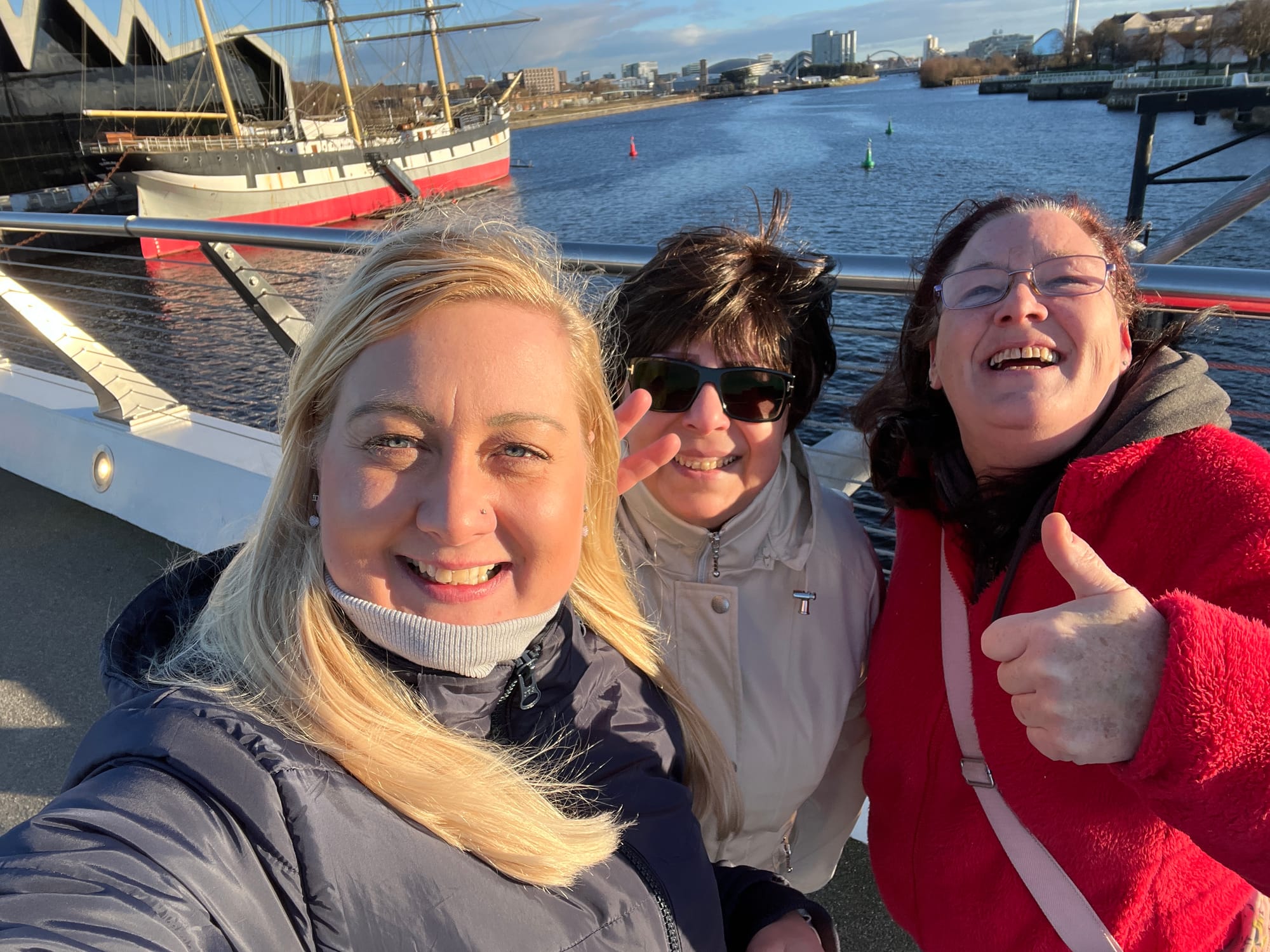
Michaela was studying international marketing at university in 2022 and secured a work placement with Invisible Cities (IC). She spoke to IC founder and CEO, Zakia Moulaoui Guery, and got funding to support a local walking group in Govan.
The first walk was on 27 July 2022 when 7 people joined the walk.
Michaela started the project from scratch with the help of Angie and a partnership with Govan Community Project. When the community project's community development worker left the walking project, Invisible Cities carried it on with Angie as the tour guide.
Michaela said: "We started it from scratch. It was not easy. We were told it might be difficult to do. But we kept going.
"We started with a loose form of guiding and developed walks around six different topics, including health, community and languages. We visit local charities, museums and have built partnerships in the community.
Meet Me in Govan guides like Silvana and Angie are trained and paid for their tour guide work by Invisible Cities.
Michaela explained: "The guides receive Invisible Cities local training in Glasgow. Then there is an interview after and people can then see how they feel about becoming a tour guide. Some join. Some choose not to. They might become a supporter even if they don’t become a guide.
“They get the training, regardless. Afterwards they can ask themselves, ‘Do I need more time to decide or do I do something else?’
“It is like a family. We keep it as a safe space, respect each other, support each other and be there for one another.”
Michaela said charities and organisations in Govan and Glasgow were welcome to join the walks, to get more people involved in the walks and talk about potential collaborations.
Walkers in the group, community people and groups and charities are invited to be guests on Michaela's monthly live show on Sunny Govan Radio, where she also talks about health matters, and promotes Invisible Cities and Meet Me In Govan.
Meet Me in Govan also has a strong relationship with Florence House, a local care home. The home hosted MMiG's 2nd and 3rd birthday parties in its gardens, and some of its residents join MMiG walks, which Michaela says are fully accessible.
Michaela told me: "Every walk we walk different places. There is always a walk [each Thursday]. People share their experience. People become friends. And people meet outside of Meet Me in Govan as well.
"It is about quality time, not having huge numbers. We never cancel. People don’t book, they just turn up. If the weather is not good, we meet in reception or outside [the Pearce Institute]. Some people walk regardless of the weather. One group will walk, the rest stay and enjoy a coffee, keep socialising."
Having enjoyed my health walk and the tour of the Health Innovation Hub, I agreed with Michaela to come back another time for a different walk in the Meet Me in Govan series.
Part 8: Visiting the ACVC Hub - A Partner in the Community with Meet Me in Govan
On a different walk with the Meet Me in Govan project later in the summer, I joined the group in a stroll led by Angie. This one went from the Pearce Institute to visit a charity in Ibrox.
The ACVC Hub on the Moorfield Industrial Estate runs arts and crafts workshops for veterans who have experienced mental health issues, including PTSD (Post Traumatic Stress Disorder).
Supported by funding from the National Lottery and SSAFA, the Armed Forces charity, the project is open Tuesday to Thursday. Activities include pyrography, painting, pottery, woodwork and dioramas.
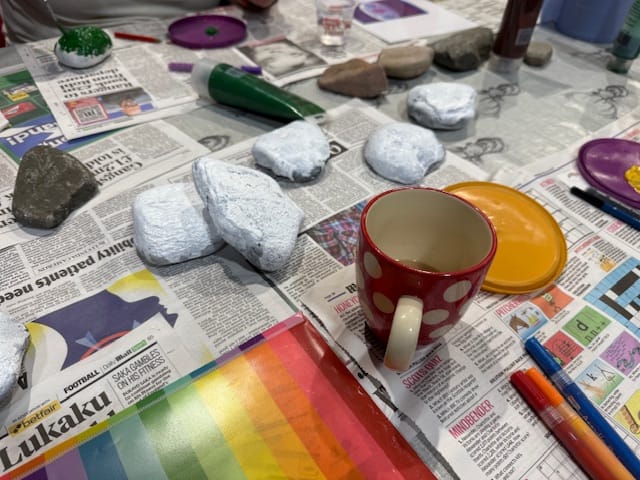
Today, the group is greeted by ACVC Hub CEO, Gaynor, who introduces us to one of the regular attendees, David. And David invites everyone in the walking group to have a go at creating "kindness rocks", painting stones in a positive and colourful way.
Tables are laid out with old sheets of newspaper, small and smooth blank rocks, paints and brushes, pencils and colouring art marker pens. And it doesn't take long before conversation hushes as minds focus on coming up with a design, and choosing words and colours to go on the stones.
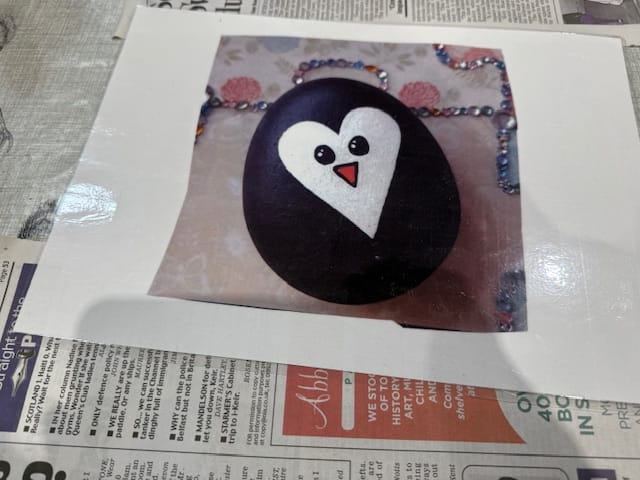
And here's an example of one made earlier, a simple yet beautiful penguin created on a piece of rock.
The short session also gives the group a chance to chat over refreshments and admire some of the wonderful arts and crafts work created by veterans. I take the opportunity to ask one of the Invisible Cities guides, Angie, about her role and leading Meet Me in Govan walks.
Part 9: Meet Your Invisible Cities Guide - Angie
It's not just Angie's bright red top and dyed blonde hair that is bold and colourful. So is Angie's personality.
If you go on a walking tour with Angie in Glasgow, you're going to get the real deal. Proper Scots with an accent thick as treacle, rapid-fire patter, the sharing of memories and anecdotes galore, plus a natural, raw humour that spills out in every conversation.
Angie told me: “People love the banter on the walks and I also teach them a few Glasgow words. I’ve got a strong accent and am used to speaking fast so I have slowed down how I talk, to help people to make it easier for them to understand.”
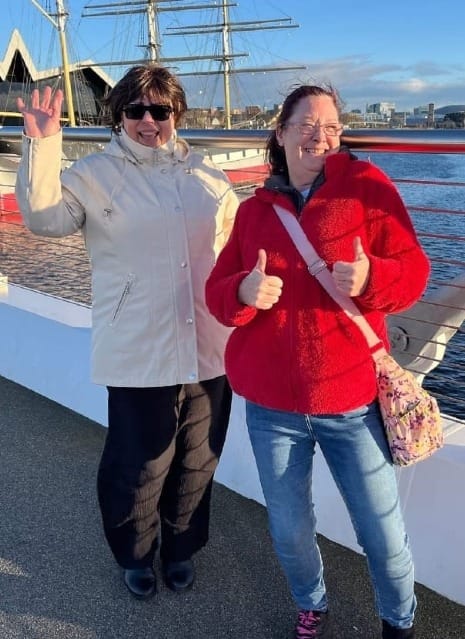
Like all Invisible Cities guides, Angie is paid a salary and has a contract of employment. And she helps to create and plan walking tours, bringing her knowledge and unique lived experience to make each tour different.
Other walks include a Mural Trail, a route through the Clyde Tunnel, Glasgow Riverside Tour, Alternative Glasgow Tour and - Angie's favourite - The People of Glasgow Tour.
All Invisible Cities guides undergo training. Angie trained in Edinburgh although the social enterprise now trains all of its Glasgow tour guides in Glasgow.
Angie said: “I loved the training. The first walk I led, I was very nervous and I just had to concentrate on what I was doing. After I’d done it a few times it became easier and I got more confidence doing it.
“The hardest part is at the beginning [of a walk], when you are waiting for people to turn up. I’ve led groups of all sizes, from two to 25, and people from all over the world. If it’s a big group I take extra care to keep people together and safe when we’re crossing roads."
Angie was volunteering for a charity helping the homeless a few years' ago, when she was invited to walk with a group. And that was the beginning of her journey to becoming an Invisible Cities walking tour guide.
Having lived in Govan since she was 15, Angie knows the area and its history well. She freely brings her knowledge and stories from the past into her guided walks. Angie shared with me some of the challenges in her own past and it's evident that she has shown resilience, courage and determination to be here and create a new life for herself.
Angie brings energy, passion and a big personality to each walk. Once you've met her, you'll never forget her. And what a wonderful ambassador for what Invisible Cities is aiming to do.
The day I interviewed Angie was the day after she and other members of the team had been testing a new walking tour route in the city centre to celebrate the Glasgow Festival and Commonwealth Games. Angie had been interviewed by national press about that tour and her role as a guide.
When I asked Angie to sum up what it's like to be an Invisible Cities walking tour guide she said: “I love my job. I love everything about it. The walking, the talking and meeting new people."
Part 10: How to Join a Meet Me in Govan Walk
Anyone can join a Meet Me in Govan walk. You don't need to live in the area to take part. Residents from other parts of Glasgow, tourists and visitors from all over the world are welcome.
Just to prove the point, Michaela shared a story with me about one couple who live in the Scottish Highlands: “They live in Elgin and were on holiday on Shetland, and were told about the Meet Me in Govan walks and encouraged to join one. And they did.”
Have you or anyone you know visited Govan from farther away to join a Meet Me in Govan walking tour?
The walks take place every Thursday. Meet at the Pearce Institute in Govan Road for a 10.30am start. If you arrive early there is a cafe inside the building.
The group never cancels. It meets whatever the weather. If the weather is not so good, some people may still go for a walk whilst others enjoy refreshments and conversation at the cafe, for example. If the weather is really bad, the whole group will tend to enjoy a cuppa and chat in the warm and dry.
It's OK just to turn up on the day if you are one or two. If you are a group that wants to come along on a walk, it helps if you contact the organisers in advance so they have an idea of numbers.
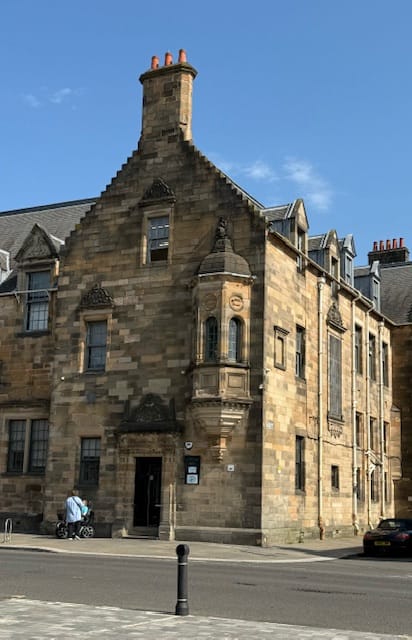
Together with Michaela, guides from Invisible Cities have developed a number of different walk routes through Govan for people to enjoy.
The best place to find out about Meet Me in Govan walks is through the project's Facebook page. You can also visit the Invisible Cities website to get a fuller picture of what the charity does, and explore and book the guided walks it offers.
Part 11: Explore More About Meet Me in Govan Walks and Invisible Cities Guided Walking Tours
Invisible Cities is a social enterprise which runs guided city walking tours across the UK. What's different about the walking tours is that they are led by people who have experienced homelessness - sharing stories of people and places in their own way.
Invisible Cities trains people who have experienced homelessness or social hardship to become walking tour guides in cities across the UK.
Walking tours run in cities like Glasgow, Edinburgh, Aberdeen, Manchester, Liverpool and York. More cities are due to join the list soon.
Find out more about the story of Invisible Cities and available walking tours on their website.
Meet Me in Govan is one of the projects run by Invisible Cities. Updates and details of walks can be found on the Meet Me in Govan Facebook page.
Part 12: More Resources and Information:
If you have enjoyed reading this article and want to find out more about the project, the social enterprise behind it, or some of the landmarks on the walking tour route, you may find the following links useful:
. Meet Me in Govan - Check out what's new and what walks are happening on Facebook via the Meet Me in Govan page.
. Invisible Cities - Discover the story behind this social enterprise, the cities it serves and meet the guides who lead the walking tours in Scotland and beyond. Head over to the IC website for more details and tour bookings.
. Discover Glasgow - For more general information about what to see and do in the city, explore the Discover Glasgow website.
. Health Innovation Hub - You can enjoy the architectural design of the building, its links with the University of Glasgow and the story of its opening.
. ACVC Hub - This charity in Ibrox runs arts and crafts workshops for veterans who have experienced mental health issues, including PTSD (Post Traumatic Stress Disorder). It is one of the places Meet Me In Govan sometimes visits on its walks programme. You can also get updates on the ACVC Hub Facebook page.
. Meet the Guides - Angie and Silvana are just two of the professional guides working for Invisible Cities. They lead the Meet Me in Govan walks.
. Fairfield Heritage Museum - One of the places featured on one of the Meet Me in Govan walks, telling the story of Glasgow's greatest shipyard on the Clyde.
. The Pearce Institute - The meeting point for Meet Me in Govan Walks, also known as 'the PI', is a cultural venue and community hub.
Gary Spinks is a copywriter, storyteller and journalist. Beyond Scotland covers the interconnected themes of sustainability, community (including Citizens and Transition Town projects) and Responsible Tourism & Travel.