The Power Shift: How Scotland’s Green Energy Boom is Affecting Communities Coast to Coast
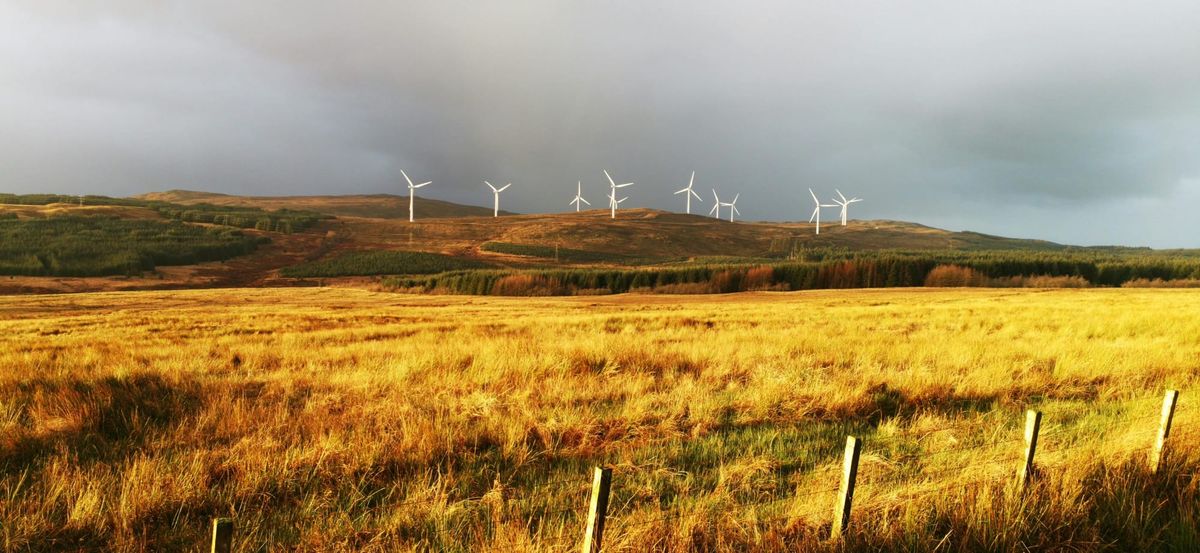
Communities in Scotland want a fairer share of the wealth created by growth in renewable energies - and a bigger say in decisions over their future.
These were two of the big messages to emerge from the collective reporting of independent journalists about the nation’s green energy boom.
Their stories and findings were shared and discussed at The Power Shift: Live one-day event in Glasgow.
The gathering of journalists, editors, researchers, campaigners and practitioners explored:
- The challenges and opportunities of renewables like wind energy,
- How to tackle misinformation and climate denial,
- Developments and the decision-making process
- How to give communities a bigger voice on green energy
- Ideas for strengthening coverage of environmental issues in Scotland.
Another big message was the importance of being able to access trusted information so communities can more easily understand the issues and make choices for positive change.
Launch of The Power Shift Magazine - a Special Issue
The Scottish Beacon - a collaborative network and platform for local journalism - developed The Power Shift project in early 2025.
With support from the Tenacious Journalism Awards and Uplift (a research and campaign group), the project saw community journalists explore how the green energy boom is impacting people and places across Scotland.
Not looking for ‘clickbait’ headlines but instead attempting to dive deeper into the nuances and complexity of the topic. Talking to people and hearing different viewpoints.
The team’s reporting has already been published on the individual news publications’ online platforms, on The Scottish Beacon website and in its newsletter, and in a special co-published series with The Herald newspaper.
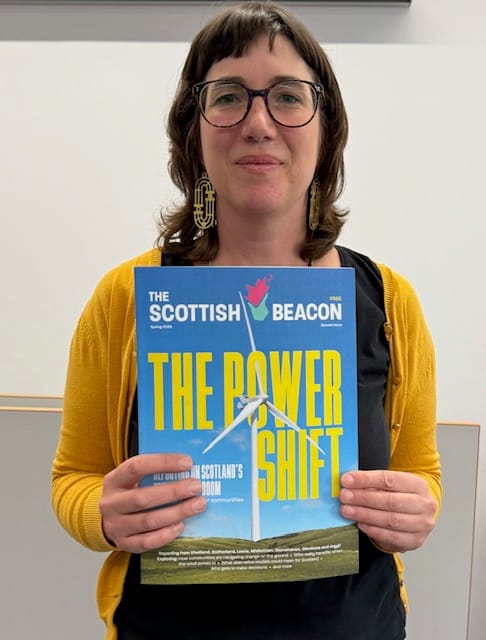
Now, stories from independent community publications across Scotland about the country’s green energy boom have been brought together in a special issue, one-off magazine called The Power Shift.
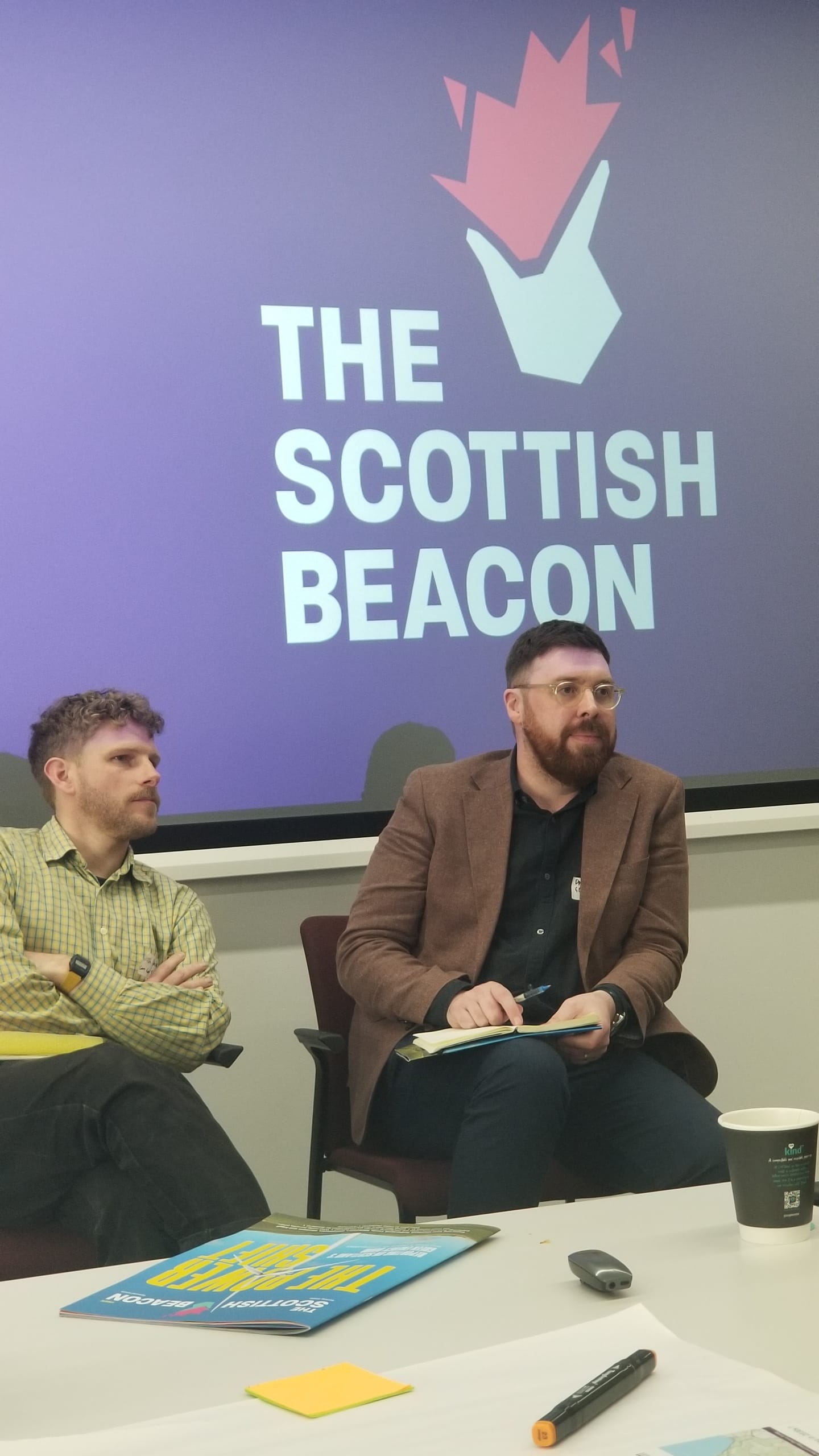
The team launched the magazine at The Power Shift: Live event at the Byres Community Hub in Glasgow on Friday (10th April).
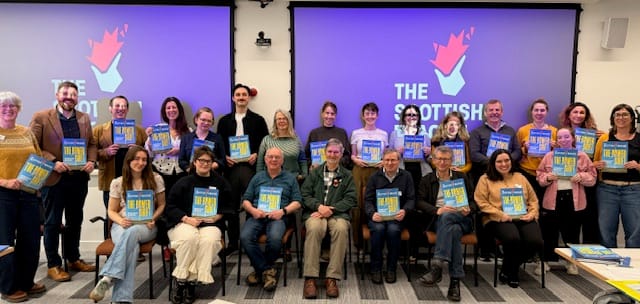
Journalists from Shetland, Sutherland, Lewis, Argyll, Midlothian, Glenkens and Stonehaven together with other contributors reported on the often divisive topic of green energy.
Articles in the magazine explore how communities are dealing with change on the ground, who gets to make decisions, who really benefits when the wind comes in, what alternative models could mean for Scotland and other questions.
Contributing publications and organisations included The Scottish Beacon, The Bellman, Bylines Scotland, The Ferret, Fios, Glenkens Gazette, Greater Govanhill, Kyle Chronicle, The Lochside Press, Shetland News and Local Storytelling Exchange.
The editorial team was Rhiannon J Davies and Mike Small. The magazine was designed by creative director Laura Hurst.
A practical demonstration of The Scottish Beacon’s collaborative and co-creative approach, The Power Shift is a one-off issue and free. Copies will be sent to Scottish political leaders and distributed across communities.
Key Points from The Power Shift: Live Gathering in Glasgow
The reporting revealed that the green energy boom is not a clear ‘black and white’ picture. There is nuance, complexity and many different viewpoints.
Key points included:
. Communities often feel plans and developments are “done TO them” rather than “WITH them” (or led by communities)
. There’s big money in renewable energies but more of that wealth should remain in Scotland - and go to the communities most affected by developments
. Developers of renewable energy are failing to deliver on their ‘promises’ for local communities
. Communities are divided about government proposals to strengthen community energy benefits. Some residents welcome the proposed increase (in annual payments per megawatt based on onshore wind capacity) others argue it is not enough.
. Community Wealth Building is part of the way forward (but it must be genuine community wealth building, and put communities at the forefront of decisions and action)
. Community Councils and the planning process, in their current form, are not working for communities facing green energy developments and experiencing “consultation fatigue”.
. More funding and investment is needed to support quality journalism and accurate coverage of environmental issues.
Questions Raised at The Power Shift: Live Gathering
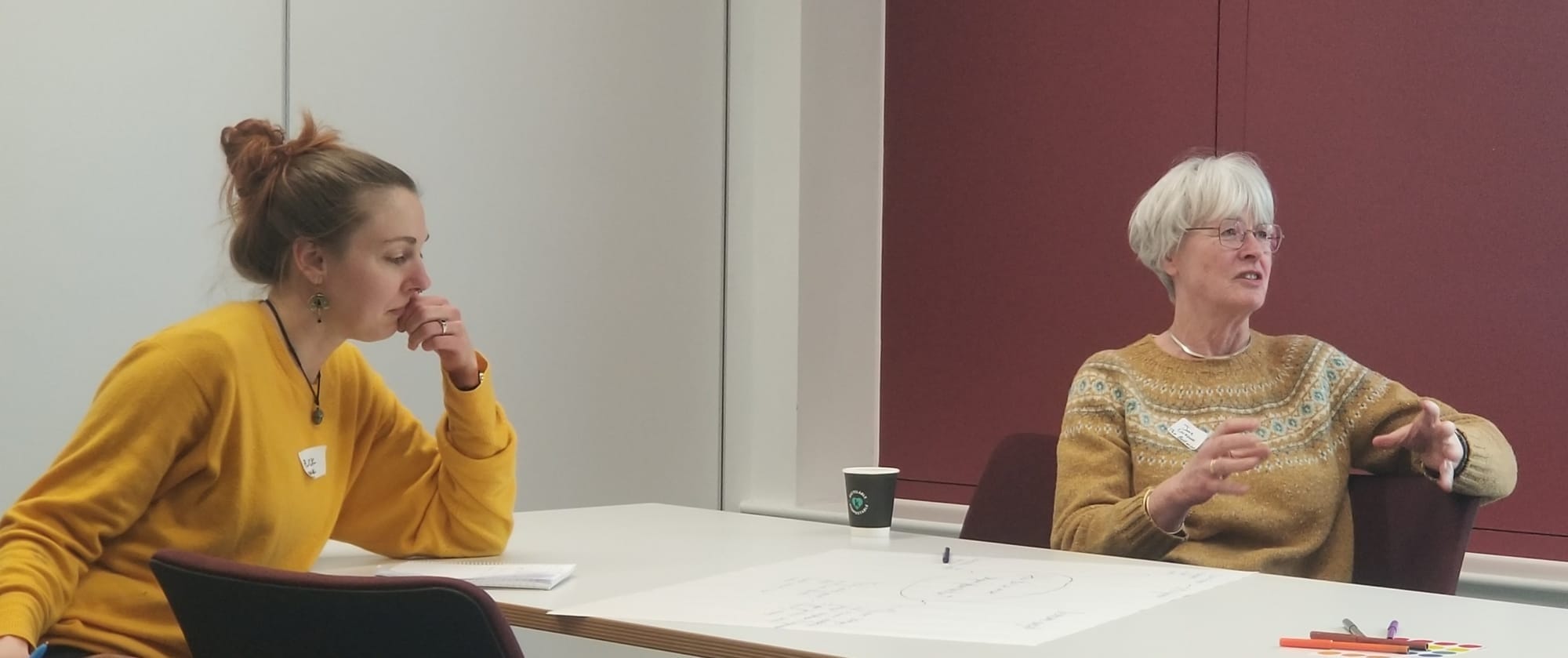
The gathering in Glasgow included panel sessions and breakout sessions. Every session raised questions, which included these:
Q. How hard is it for people to get trusted information about green energy?
Q. What is the role of planning (and does the system or process need to change)?
Q. Who will have 'ownership' of oil from Scotland and the set-up of renewables in the future?
Q. How do we tackle the ‘democratic deficit’ and build local democracy with communities at the heart of that?
Q. How do we get people to understand the gravity of the climate crisis?
Q. How do we amplify community voices?
Q. How do we move beyond polarisation (of views about green energy)?
Q. How do we rebuild the ‘democratic muscle’ in Scotland?
Q. How do we empower communities?
Q. How can we work together to tell better stories?
Q. How can we develop and make the most of a media ecosystem in Scotland?
If you work in the media or an organisation, are a member of a community group, a researcher or campaigner, why not take a look at these questions and discuss them with others?
The team behind The Power Shift would be interested to hear your views, ideas, comments and suggestions.
And maybe there’s a question you would like to add to the list for everyone to think about and discuss?
A New Network for Environmental Journalists in Scotland
The Power Shift Event also saw the introduction of a new environmental network in Scotland.
The aim is to connect journalists and editors who are interested in climate, energy and community reporting to bolster coverage of these issues. The network will also be open to researchers, campaigners, community voices and practitioners in these fields of work.
The network for Scotland will help journalists to discuss issues; access information, research and viewpoints; share ideas and challenges’; and collaborate on national news or regional reporting projects.
By improving environmental coverage in Scotland, the network wants stories to inform, engage and give communities the knowledge they need to make positive change happen.
For more information about the network, contact Rhiannon J Davies at The Scottish Beacon.
Resources and more information
Media
More information about the community journalism outlets who put together The Power Shift reporting can be found using the relevant links below.
The local news outlets who co-created the project are part of the network known as The Scottish Beacon.
Founder of The Scottish Beacon, Rhiannon J Davies, is also the founding editor of Greater Govanhill - a CIC (Community Interest Company) - and a magazine publisher. In addition, Rhiannon co-founded Greater Community Media with Lucas Batt to support people to build more community-centred media.
Independent investigative journalism for Scotland can be found at The Ferret.
The Local Storytelling Exchange shares and promotes stories about people, communities and businesses creating a greener, cleaner world.
And the national not-for-profit Bylines Scotland supports citizen journalism.
Local newspapers reporting for The Power Shift (all are part of The Scottish Beacon project)
Glenkens Gazette is a bi-monthly publication which covers the areas of Carsphairn, Dalry, Balmaclellan, New Galloway, Mossdale, Laurieston, Crossmichael, Corsock and Parton, i.e. the Glenkens and wider district in remote-rural Dumfries and Galloway.
Glenkens Gazette has a sister website, the Glenkens Hub www.glenkens.scot.
Fios is a fortnightly local newspaper covering North Lewis.
Kyle Chronicle is a quarterly news publication covering Ardgay, Bonar Bridge, Culrain, Rosehall, Invershin, Spinningdale, Migdale, Strath Oykel, Strathcarron and Glen Cassley.
Shetland News provides local news for one of Scotland’s most famous islands.
Midlothian View covers the Midlothian area.
The Lochside Press provides news from the Rosneath Peninsula, Helensburgh and surrounding areas.
The Bellman shares news from Stonehaven in Aberdeenshire.
Community Organisations & Campaign Groups
The Scottish Community Alliance is a coalition of national network intermediaries, each one representing a different aspect of Scotland’s diverse community.
Community Land Scotland is working to build a community land movement where current and future community landowners are supported to thrive.
Uplift is an organisation working to support efforts to create a rapid and fair transition away from oil and gas production in the UK.
Scotland needs high quality independent journalism. Scotland needs strong local and community journalism.
Please support your local or community newspaper, and spread the word about projects like The Scottish Beacon and Greater Govanhill. (And, of course, Beyond Scotland here).
Gary Spinks is a copywriter, storyteller and journalist. Beyond Scotland covers the interconnected themes of sustainability, community (including Citizens and Transition Town projects) and Responsible Tourism & Travel.