What Now for Glasgow After Another Iconic Building is Destroyed by Fire?
It's a Sunday morning in Glasgow, seven days after a ferocious fire swept through and destroyed an iconic building close to Glasgow Central, Scotland's busiest train station.
As I wander along the streets of the city centre life appears to go on as usual. There are people enjoying a cafe breakfast or brunch, shoppers shopping and tourists heading for attractions.
It's only when I reach the junction of West George Street and Renfield Street, and look south down the street, that I catch my first sight of the aftermath of the blaze which is believed to have started in a vape shop in nearby Union Street.
The Scottish Fire and Rescue Service (SFRS) - which had nearly 300 firefighters and 18 appliances tackling the fire during its peak - has done its (brave and some say miraculous) job and left the site in the hands of Glasgow City Council.
There are no flames now. No smouldering wisps of grey. But, even a week after the blaze, you can still smell the lingering smoke on your nostrils.
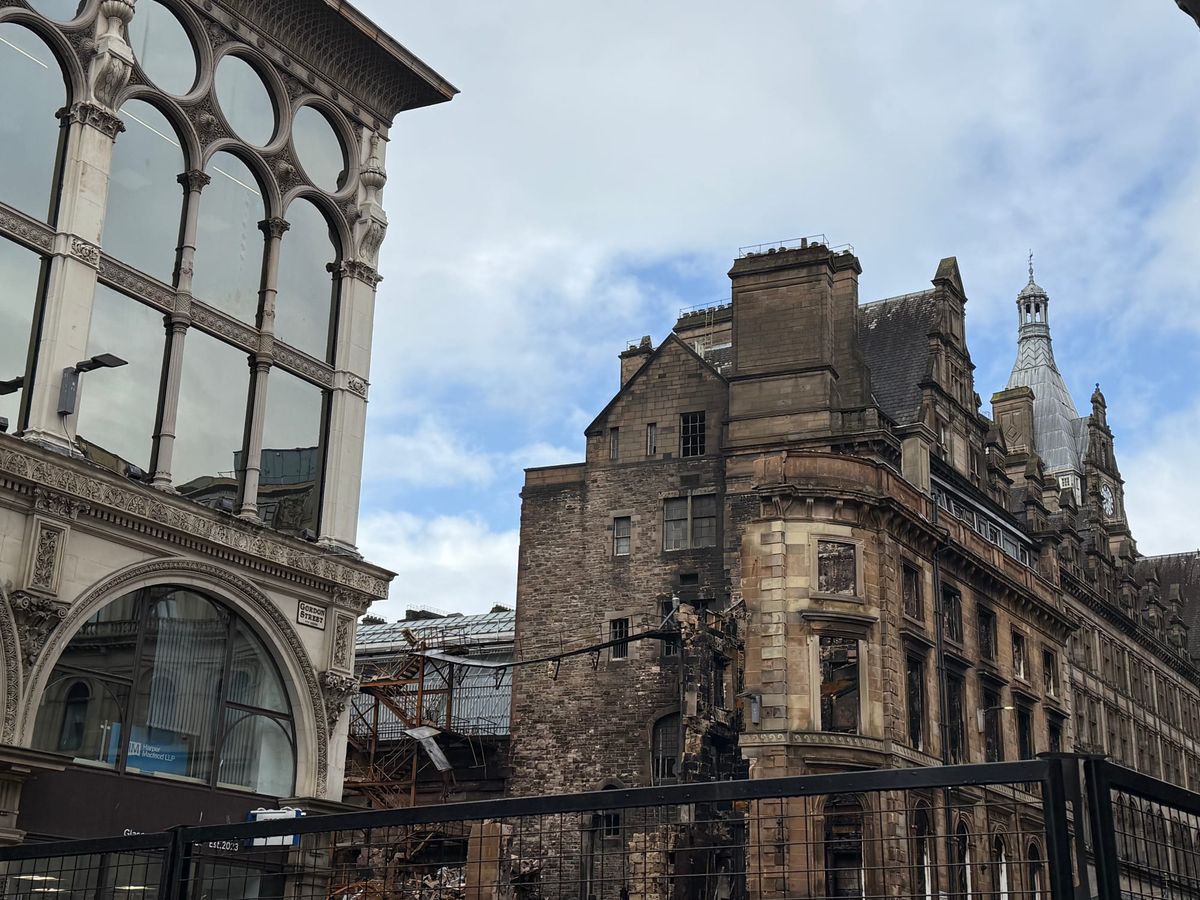
I've seen numerous photographs of how Forsyth House and the Union Corner building, which date back to the mid-19th century, looked before the fire. An elegant example of Victorian architecture with a beautiful dome sat high on the corner.
Now the picture is one of ruin. Look carefully at the building and you can see blackened interior stonework, large wooden beams charred black by the fire, and a walkway now a twisted bridge of metal appearing to hang loosely from the structure.
On the ground at the base of the building lie the remnants of a tomb of fallen brick, wood and stone. The clearance has begun but much remains to do.
Around me there is a small but steady flow of people walking up to the security fencing of the safety zone around the building and taking pictures on their phones. Most do so in silence.
A week on from the blaze, there's still an air of shock around. The overwhelming feeling expressed by people was sadness at the loss of the building. Of course, there was relief that nobody was hurt in the incident, but there was a deep sense of loss felt here, too.
The scene reminded me of a funeral, people paying respects to the remnants of the building as they might to a loved one in a coffin. Yes, people were curious and wanted to see the disaster site. But for most it did seem there was a sense of loss. One resident remarked that he had put off coming to the site because he wasn't sure he wanted to see what was left of the building he knew so well.
This was a building that - like others lost to fire in the city's recent past - seems to move people. This was a building that local people, especially commuters, knew well. This was a building where you got the sense people felt some kind of personal connection to it, however loose or tenuous.
It was as if they each had a story about it they could tell you - and wanted to tell you.
Maybe one of the reasons for that is this is not the first building in the city centre to be taken by fire. In fact, the city appears to have an unenviable record when it comes to loss of buildings (and rebuilding or restoring them in a way the people would prefer).
The School of Art, designed by Charles Rennie Mackintosh, caught fire twice, once in 2014 and again in 2018. The latter blaze also destroyed the O2 ABC building. Also in 2018, a fire (believed to be caused by an electrical fault) took out a listed building on Sauchiehall Street, which contained the popular Victoria's nightclub.
Another nightclub, the Shack, was razed to the ground by a fire in 2004. Another 19th century building lost to the city.
There have also been fires outside of the city centre, including two at a block of B-listed tenement flats at the Albert Cross in Pollokshields on the south side, in 2019 and 2020.
The latest blaze at the corner of Union Street and Gordon Street rekindles memories of past destruction and loss.
Travel Disruption Continues This Week in Glasgow
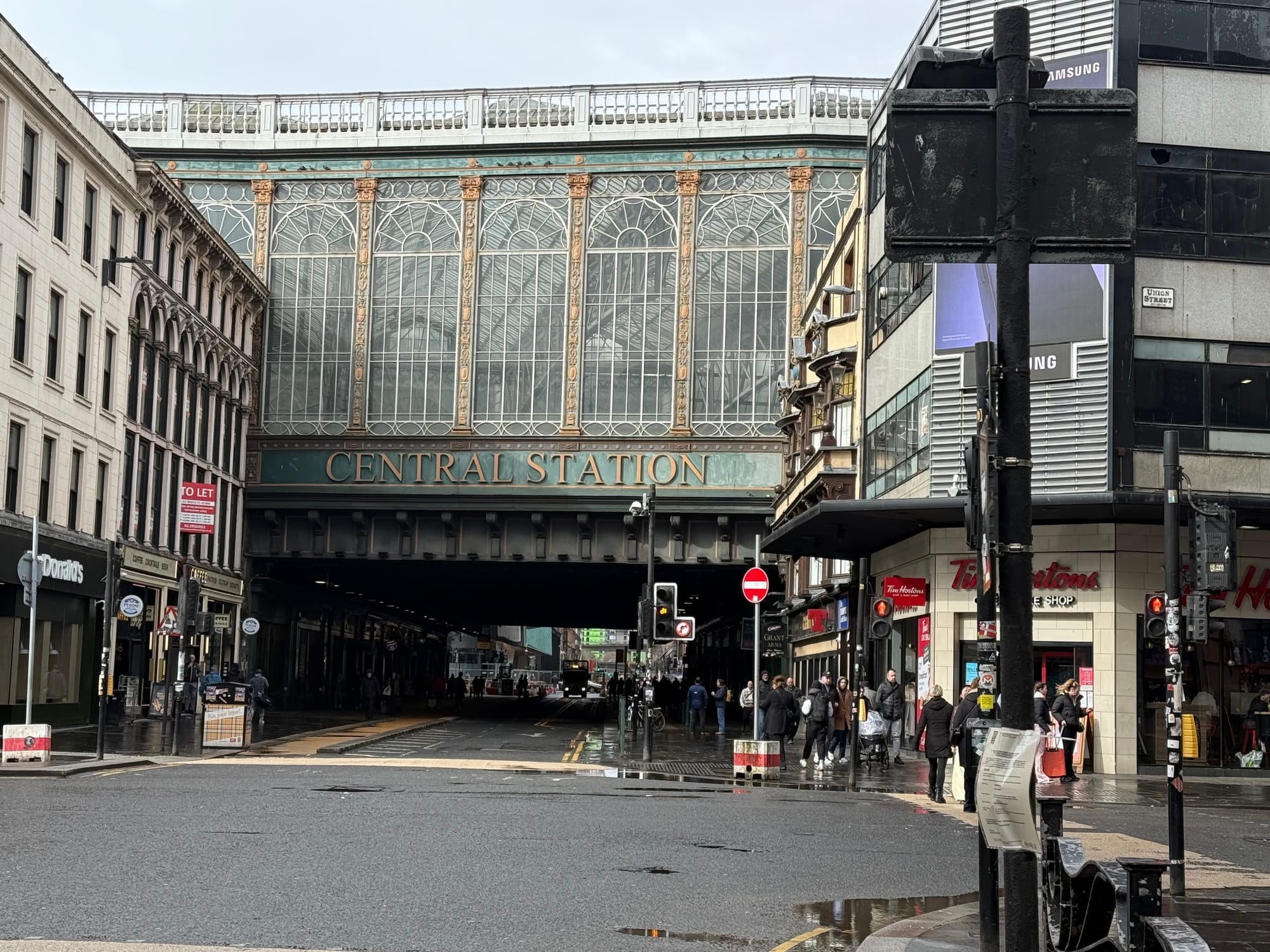
Remarkably - and almost certainly down to the efforts of the SFRS teams in tackling the blaze - the neighbouring Glasgow Central station building appears to have escaped any significant damage, though investigation and safety checks are still ongoing.
It has meant significant travel disruption to commuters, travellers and visitors to the city.
The high-level platforms of Glasgow Central remain shut until at least Wednesday (18 March) while demolition of the Union Cross building - where only the façade at the junction with Gordon Street remains standing - continues.
Those platforms carry the main train services to England and local services to other parts of Scotland, and travellers are advised to check the National Rail website for the latest information.
There is better news for the low-level platforms and some local services at Glasgow Central, as they are now open. The Scotrail website provides a travel update with details about the revised timetable, including suspended and altered services.
Because of the safety zone set up around the ruined Union Corner building, some roads around the area remain closed. Motorists and bus users may find some delays, especially at peak times.
Glasgow Queen Street and other city centre train stations are open, and taxis are another option. Pedestrians and cyclists can move freely around.
What Does It Mean for Business in Glasgow?
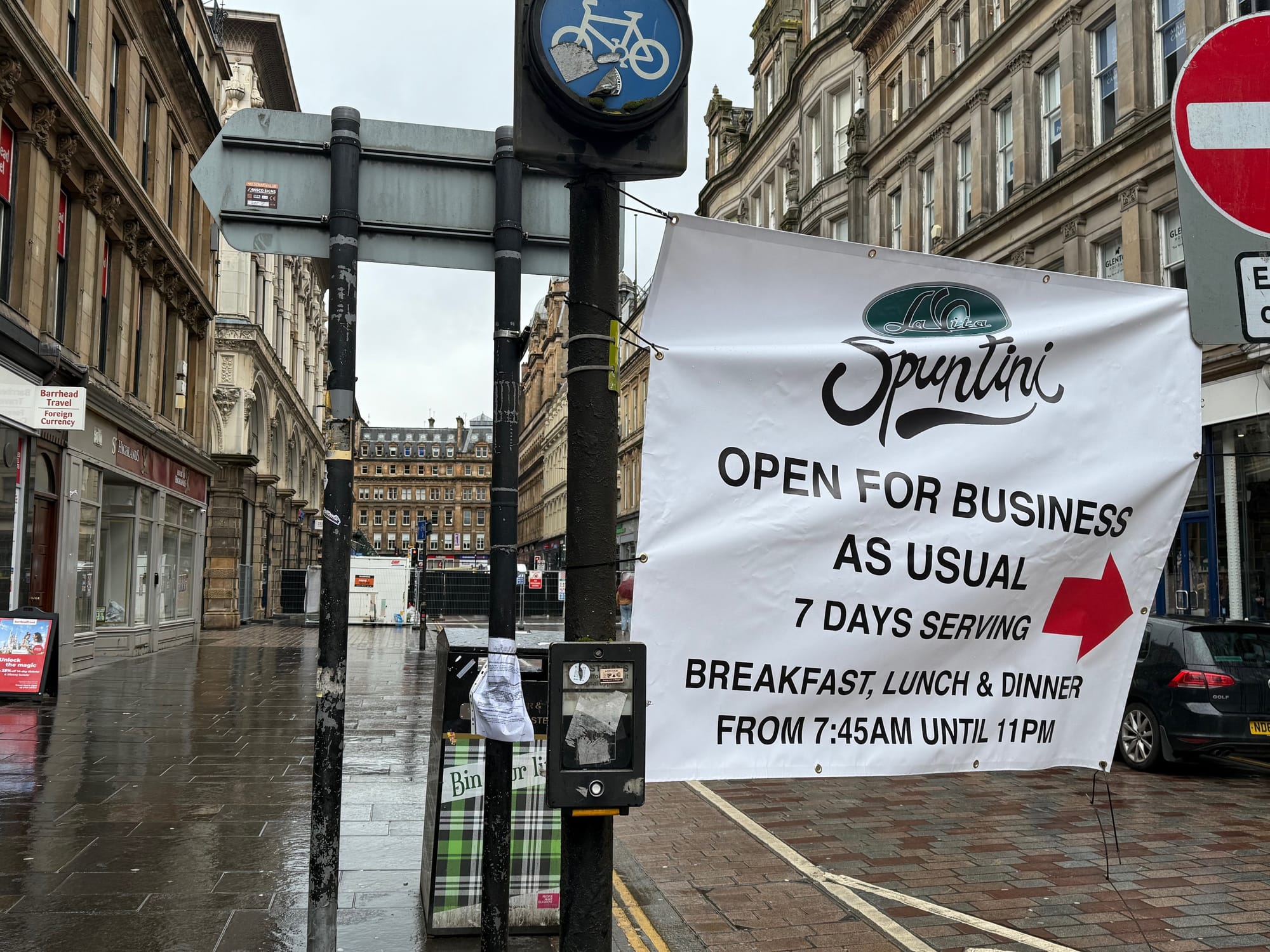
Fortunately, nobody was injured by the blaze. However, a number of small businesses in Union Street and Gordon Street were lost to the fire.
A series of GoFundMe pages have been set up to support business owners who have lost everything and raised more than £150,000 in just the first week.
For those businesses, the challenge will be how to get back up and running and finding alternative spaces until more is known about the rebuilding plans.
But the fire has also impacted businesses in the city centre in general. Retailers and other businesses say the (necessary) road and street closures to create the safety zone, and the shutdown of Glasgow Central train station are not good for business.
The volume of support for the GoFundMe pages; offers of office and desk space, and computer use from other business owners; and the sight of people shopping, eating out and enjoying the pubs, are encouraging signs. They point to a city which has heart, resilience and defiance of the odds.
Only time will tell how well businesses will recover from the destructive blaze.
What Does It Mean for Tourism in Glasgow?
It's too early to say how the fire may affect tourism in the city.
Travel disruption rarely helps a destination but the lack of train services during the initial shutdown of Glasgow Central station simply seemed to produce more cars on the roads into the city centre.
Commuters and tourists can usually find alternative ways to travel or make a journey.
It's possible some travellers may have put off or delayed plans to visit the city. But on the flip side, Glasgow might also experience some form of mini "Notre-Dame" effect (where visitors are curious to see the site of a fire in a historic building). The Forsyth House/Union Corner building cannot be compared fairly to the famous medieval cathedral in Paris, ravaged by fire in 2019, but the same principle may apply.
Notre-Dame was severely damaged by the blaze but tourists still visited the site even though the attraction was closed to the public. And, of course, since reopening in December 2024, the cathedral has seen record numbers of visitors.
Who's to say Glasgow won't see an uptick in visitor numbers a few years from now, including people interested in how the building has been restored?
I get the sense the city won't lose out too much on tourism because of the blaze. The main tourist season has not yet begun and Glasgow Central should be fully reopened before then. And with the Commonwealth Games starting in late July, the expectations for local tourism are high.
It feels wholly appropriate that Glasgow's International Comedy Festival opened just a few days after the fire. The city and its people could do with some good laughs to lift the spirits and take their minds off the latest blow.
Many Questions, Challenges and Answers Remain for Leaders in Glasgow and Beyond
The huge blaze near Glasgow Central has made the headlines, nationally and internationally.
It's had everybody talking and inevitably raised many important questions, which the city council and Government will need to consider.
The fire was seen to start inside a vape shop in Union Street. Vapes carry lithium ion batteries, which can explode or catch fire if damaged. It's why people are warned NOT to put them in normal household bins or recycling.
There are numerous questions being asked:
- Should a vape shop be allowed to open near critical infrastructure, like train stations or key buildings?
- Why are there not tighter controls over the storage of lithium ion batteries?
- Is 'registration' of vape shops enough or should they be subject to a special licence (a report by The Herald newspaper says four out of five vape shops in the city have failed to update their details to the council)?
- Have cutbacks to local environmental health services reduced the city's ability to proactively check premises are meeting the standards required? Does more investment in that need to be considered?
- How does the city protect its heritage buildings from another fire disaster?
- How long will the rebuild or restoration take - and who's going to pay for it?
- Why are there so many empty buildings in the city centre? Why does it seem that it's more 'profitable' for owners to keep buildings empty or sites staying as 'building sites' than return them to use? How can we bring more spaces into good use again?
- What can be done about the complex nature of ownership of these buildings, which can hamper the process of rebuilding, repair or restoration (the city council could take over ownership of the site but the compulsory purchase process can take time and cost big money)?
- What contingency plans are in place for major fires and incidents? Do they need to be reviewed?
- Can the information available to travellers be conveyed faster and clearer when travel and public transport services are disrupted?
- Longer term, does Glasgow need a big vision and plan for protecting the city centre better - and keeping it a safe, vibrant and healthy place to visit and stay?
- How will the city council involve communities and residents in the shaping of Glasgow's future - and decisions over rebuilding after disaster?
There will be other questions on people's minds, too. The above are just some of those I've seen and heard around the city, or added myself.
MORE INFORMATION & UPDATES:
. Rail travel updates are available from National Rail and Scotrail.
. News updates are available from newspapers like The Herald and Glasgow Times, BBC Radio Scotland and local radio stations, and from other online news sources. Daily news is also provided by independent journalists at the Glasgow Wrap and The Splash Glasgow.
. Tourist Information is available from Visit Glasgow.